Residential care & nursing homes
d’Oude Raai is ready for the future
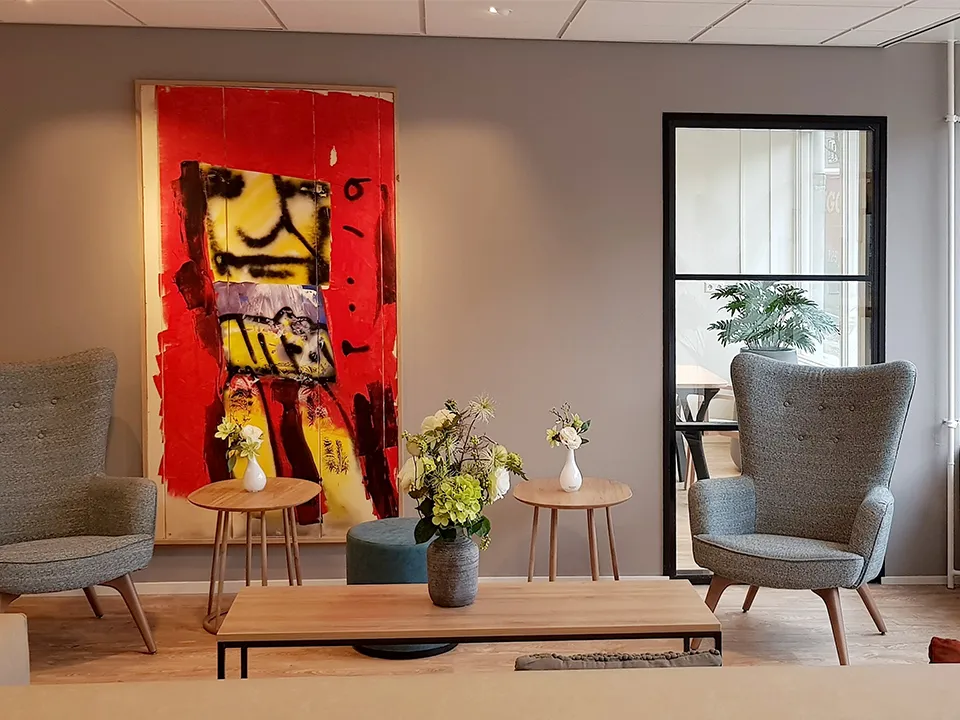
From a traditional care home for older people to a place to live for older people requiring intensive care.
That is the transformation d’Oude Raai, in the De Pijp district of Amsterdam, has undergone over the past 1.5 years. The 1980s building has been adapted for older people with a care needs assessment of ZZP 5 or above.
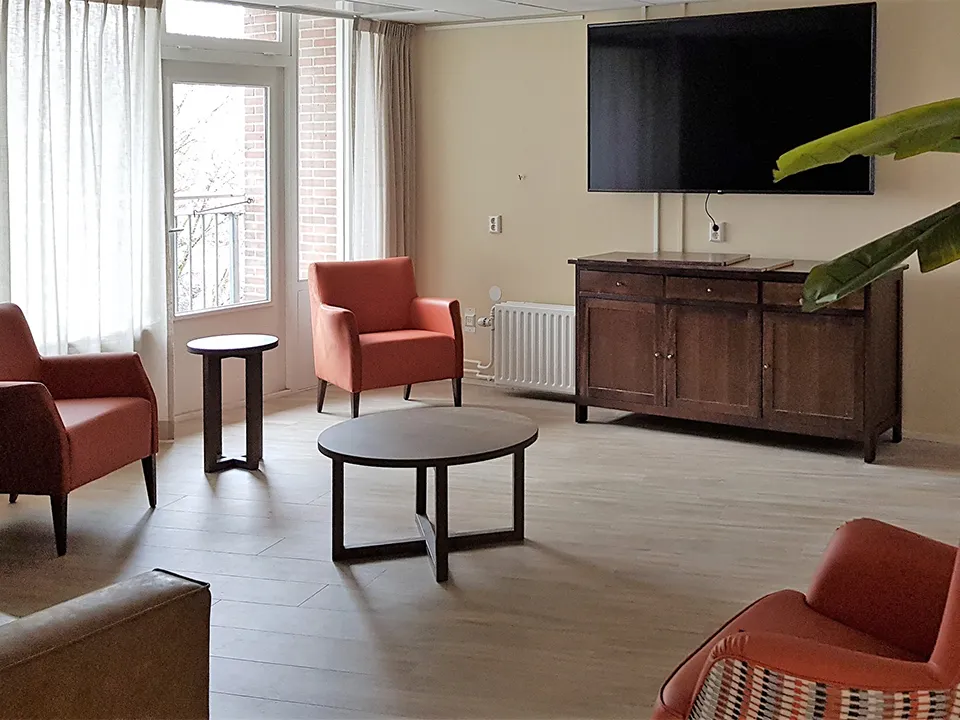
The renovation responds to changing circumstances in elderly care. “These days, older people remain independent for as long as possible,” says Nancy Wilmink, housing project manager at Cordaan, the care provider that operates d’Oude Raai. “That is why we needed to adapt d’Oude Raai to provide more intensive care for older people who can no longer live independently, even with home care. These are mainly older people with dementia or somatic conditions who need 24-hour care and supervision. Our residents now live here for an average of 9 months. This really is the final stage of life.”
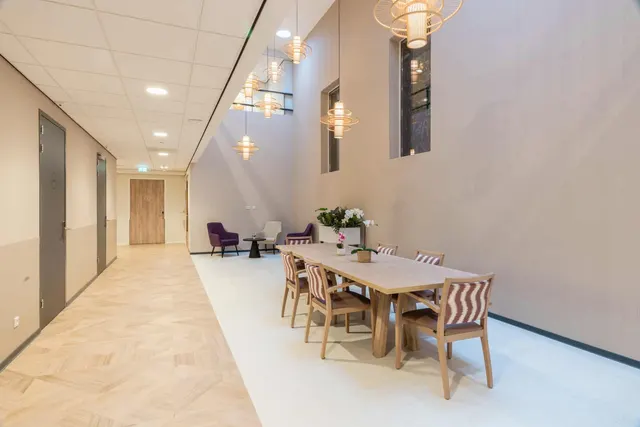
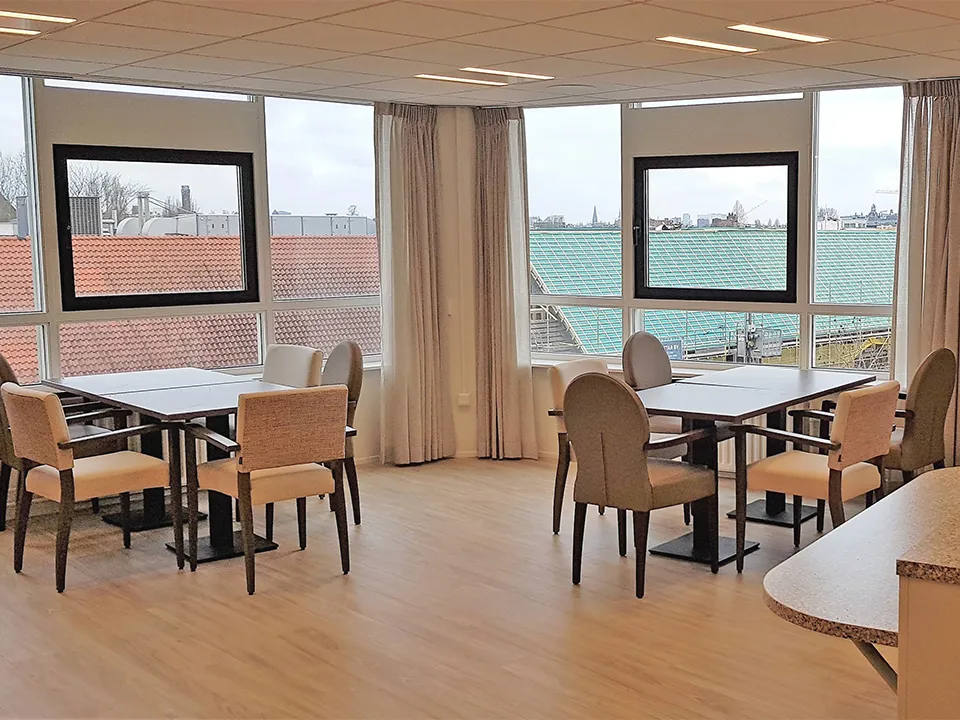
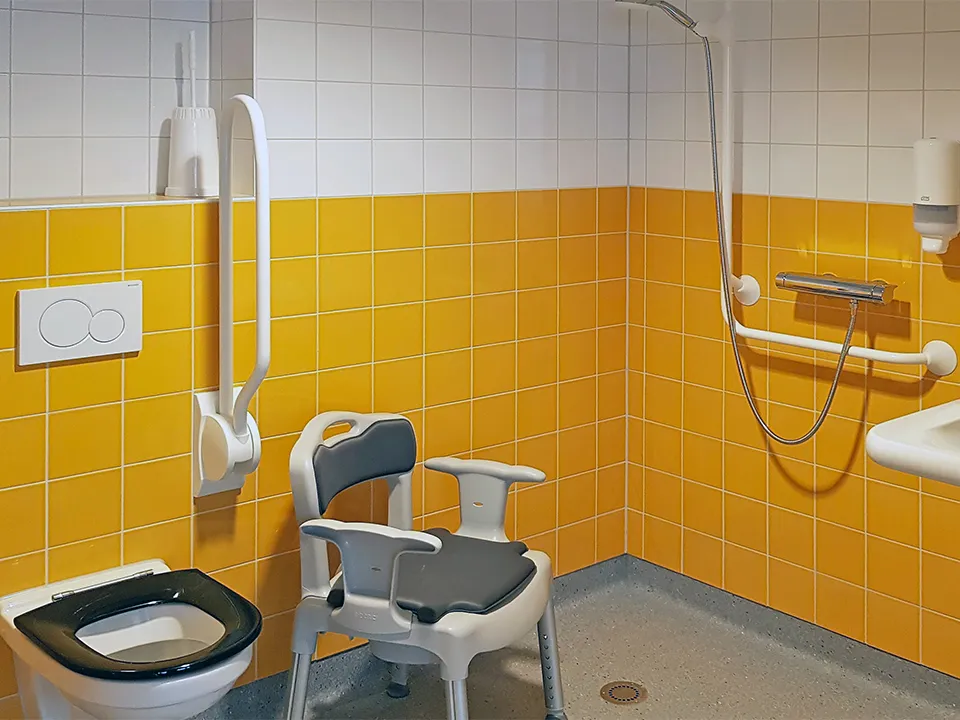
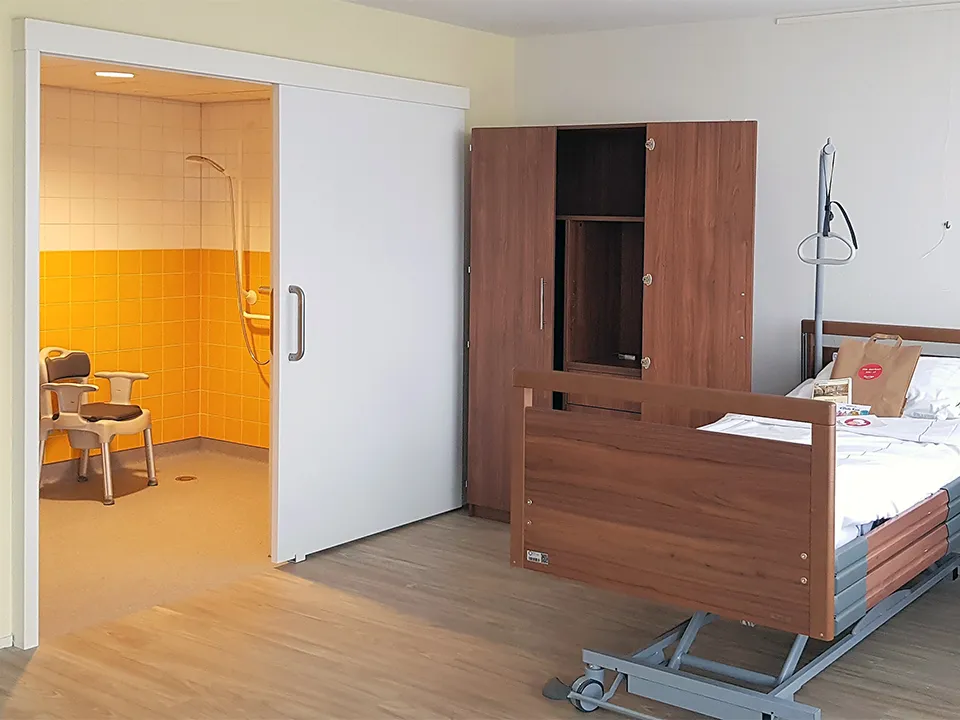
The 91 apartments have been adapted to provide intensive care and support. Front doors have been widened, bathrooms enlarged and modernised, building services replaced and supplemented with new care domotics, and fire safety improved. The apartments are equipped with kitchenettes. Residents can have a meal in the shared living rooms, which have been created on every floor and include a kitchen. There they can meet other residents and, if they wish, receive visitors. Wilmink says: “We also want to encourage people to leave their studios.”
Enjoying the greenery
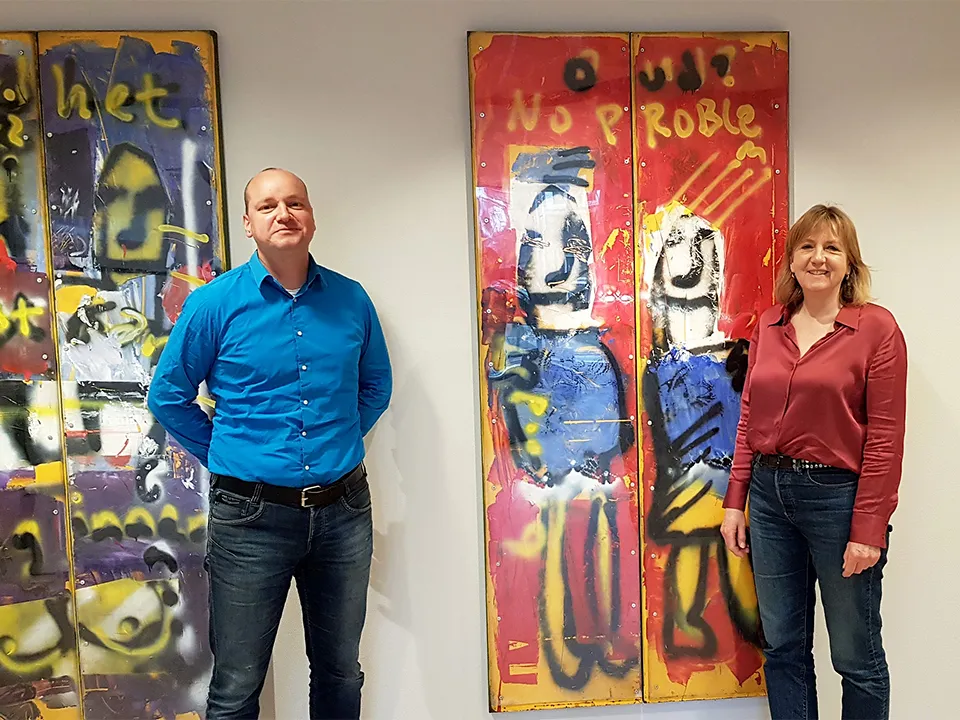
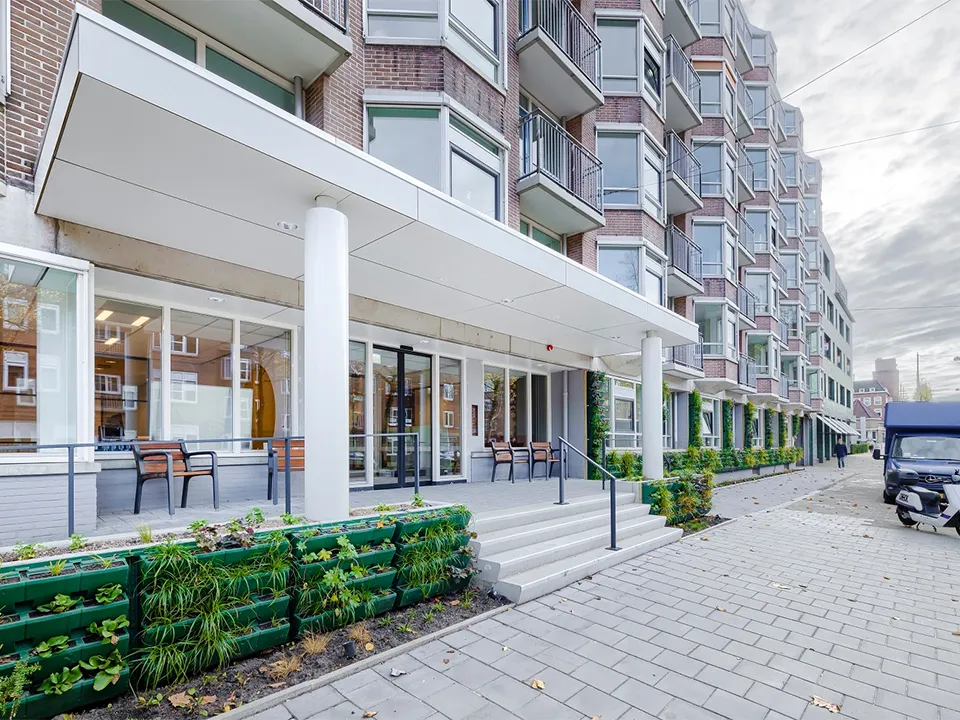
A number of small apartments have been combined. However, the total number of apartments has remained almost unchanged, as new apartments have been added in a recess at the rear of the building. A new lift shaft has been built for a bed lift. The building’s accessibility has also been improved by narrowing the ramp at the front, which is used for deliveries. Greenery on the façade gives the front of the building a friendlier appearance. The garden has been refurbished. Wilmink says: “Our residents can often no longer go out on their own, but some can still visit the garden. More space has been created for them to enjoy the greenery and the petting farm.” A special feature is the old lift doors, once painted by Herman Brood. They now hang on the wall as works of art.
A visible, accessible community hub
The renovation also provided an opportunity to strengthen d’Oude Raai’s role in the neighbourhood. The restaurant on the ground floor now has the feel of a grand café and has its own entrance on the corner with Lizzy Ansinghstraat. Restaurant visitors no longer have to enter through the residents’ entrance. The reception desk at that entrance has been removed. A host or hostess will now welcome people in the restaurant. “The new entrance, for which the City of Amsterdam also provided a grant, responds to the neighbourhood’s wish to make the community function more visible and accessible. As well as residents, local people can visit the restaurant for a coffee, lunch or a meal. Activities can also be organised there for local residents and in collaboration with them,” says Matthias de Vries, day activities project manager. “It is very accessible, and people can easily drop in. The restaurant is the link between residents receiving residential care and the neighbourhood.”
‘De Buren van Cordaan’
There will also be rooms available for a range of activities. De Vries says: “On the ground floor, we want to offer as wide a programme as possible as part of the ‘De Buren van Cordaan’ project.
Together with various local organisations, De Buren is putting together a programme of information and advice for local residents. Active residents can organise their own activities at d’Oude Raai. There is plenty to do here, with a wide range of social and/or creative activities designed to meet people’s needs and interests. These range from day activities to bingo, memory training to drop-in sessions with the neighbourhood police officer, and film nights to lectures on art and politics. This also helps older people in the neighbourhood to live independently for longer.”
A room on the ground floor is available for a hairdresser, chiropodist or physiotherapist. d’Oude Raai also serves as a base for Zorg in de Wijk and community care teams. Wilmink says: “Together with our construction partner Dura Vermeer and Marc Prosman Architecten, we have turned d’Oude Raai into a location that is ready for the future.”
Facts and figures
Client
Cordaan, Amsterdam
Construction
Dura Vermeer, Amsterdam
Design
Marc Prosman Architecten, Amsterdam
Interior
Vervoort Meubelen, Goirle
Construction period
September 2019, December 2020
A business enquiry for Vervoort Meubelen? Get in touch
Companies in this story
Keep following this
Get an email when a new story is published. No account needed.
- SubjectResidential care & nursing homes
- CompanyVervoort Meubelen