Residential care & nursing homes
The ideal form of housing between home and nursing home
Text Robert Kromhof Beeld Suzanne Paap en Robert Kromhof
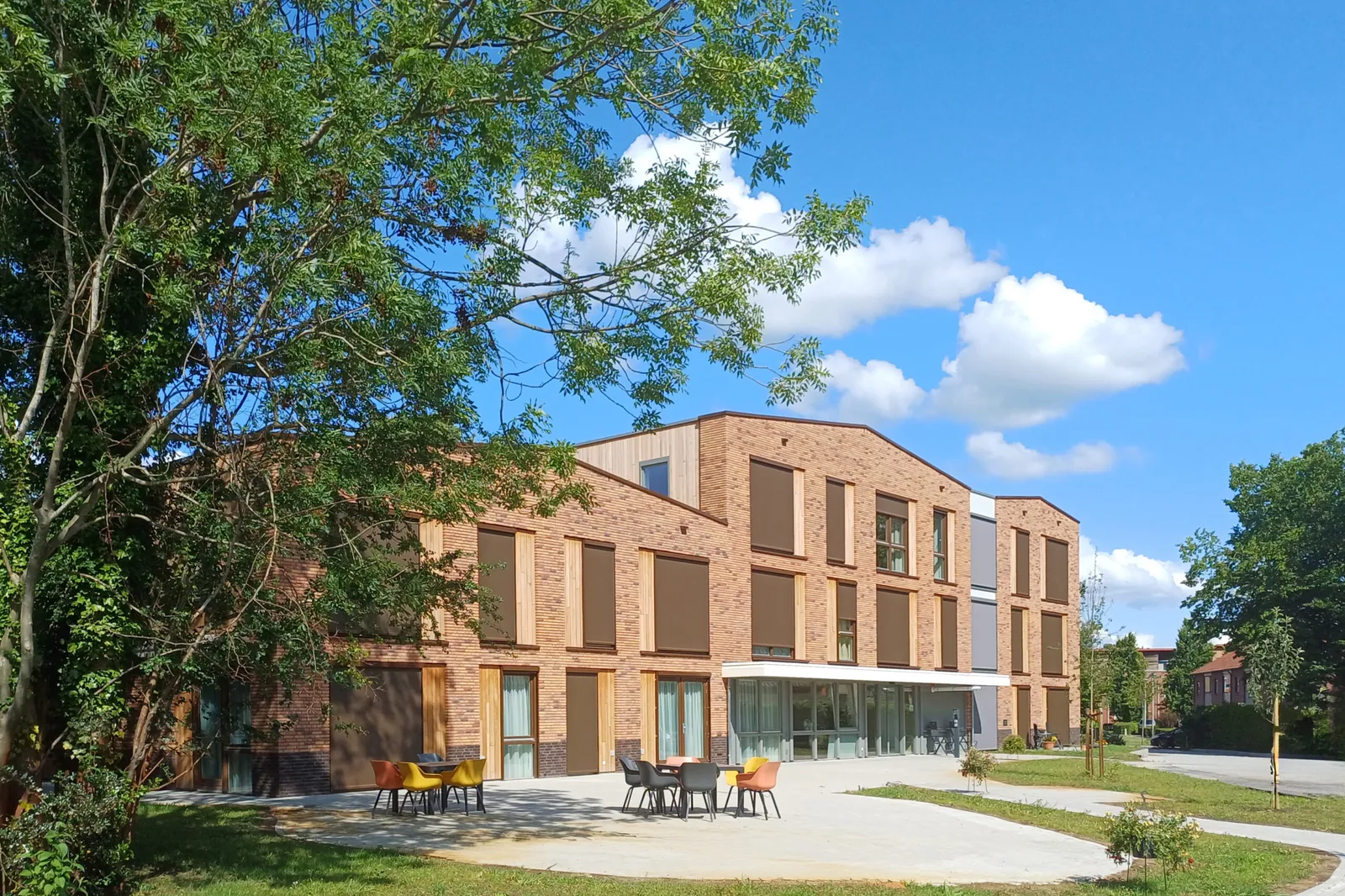
A common refrain is that the old residential care homes should be brought back. At the time, they offered a form of housing between living independently at home and moving into a nursing home. With their disappearance, the step into a nursing home has become ever greater. Nursing homes are now often associated with being the final destination.
The eligibility criteria for moving into a nursing home have also become stricter in recent years, as government policy aims to keep older people living at home for as long as possible. As a result, the average stay in a nursing home is now just nine months. It is understandable, then, that people with early-stage dementia and their informal carers, often the partner they have lived with for years, put off moving into a nursing home. This, however, regularly leads to exhausted carers and emergency admissions.
A choice of options
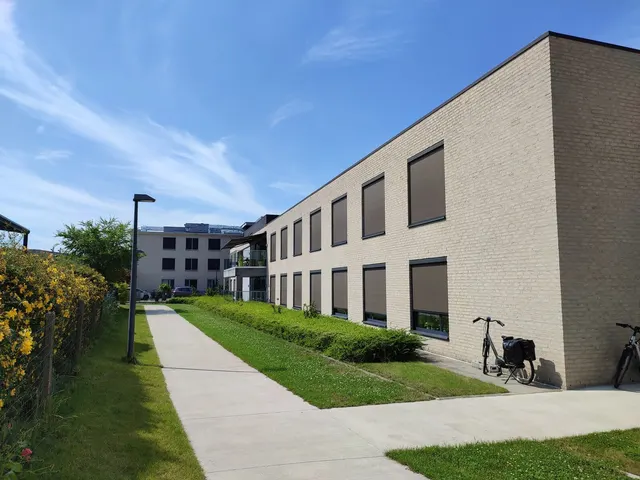
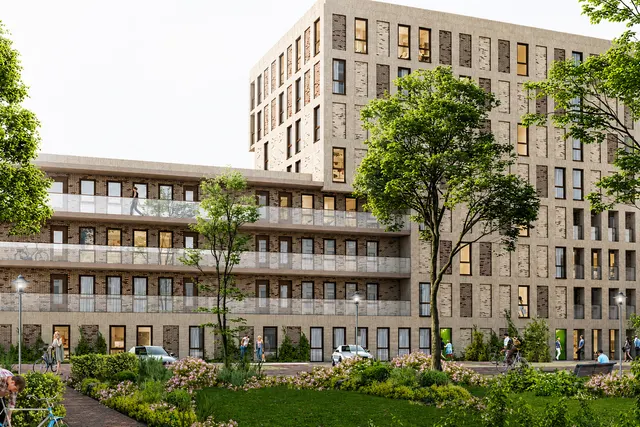
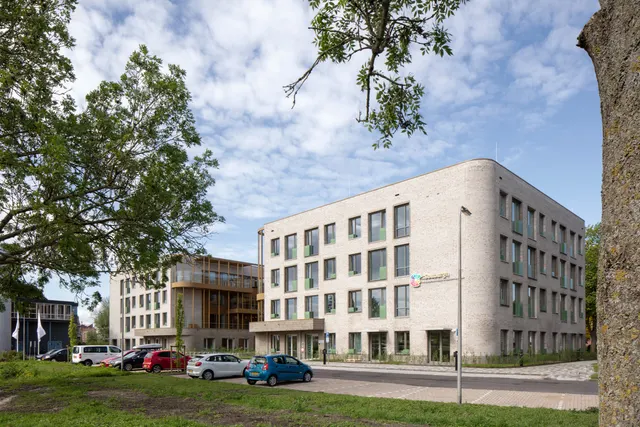
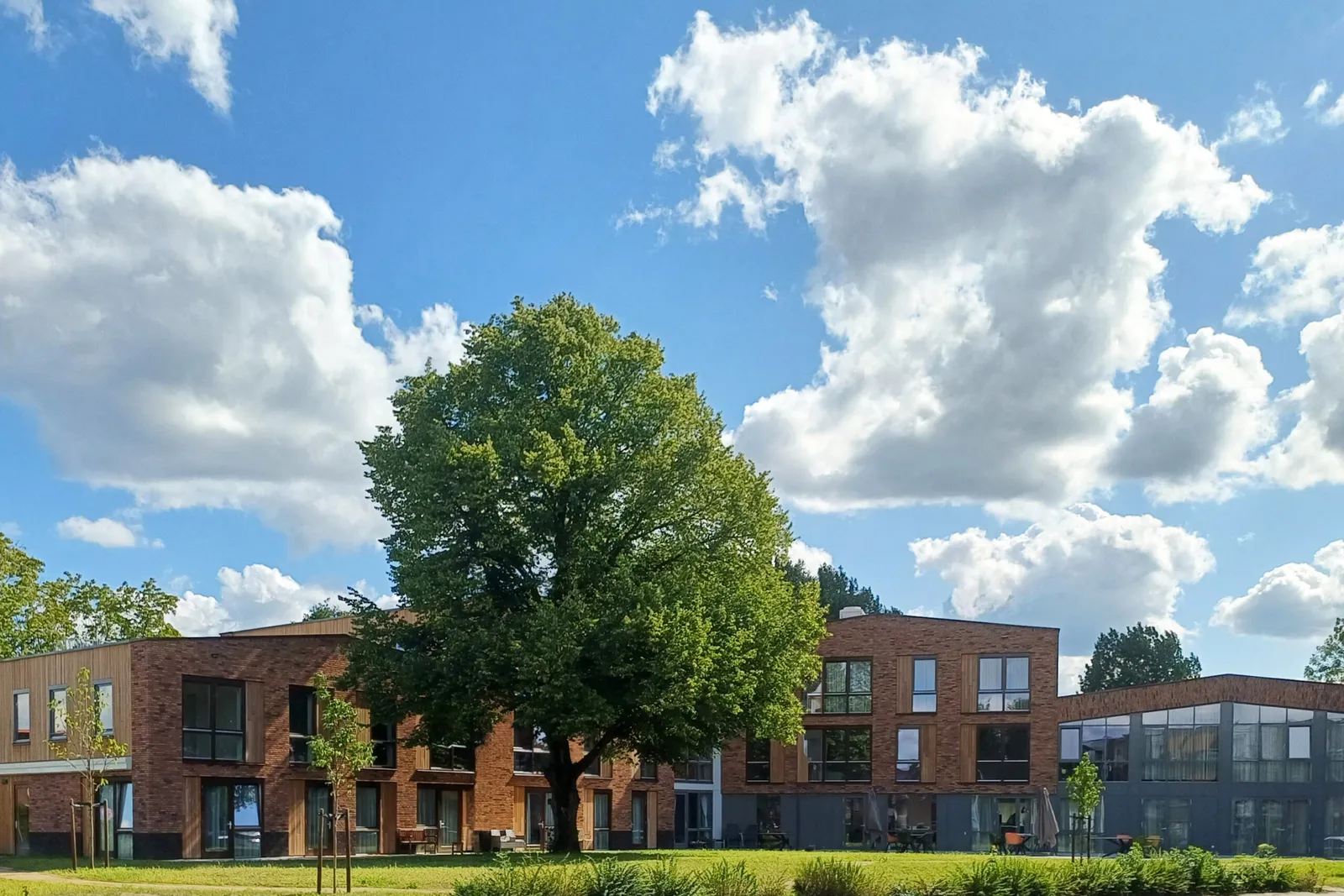
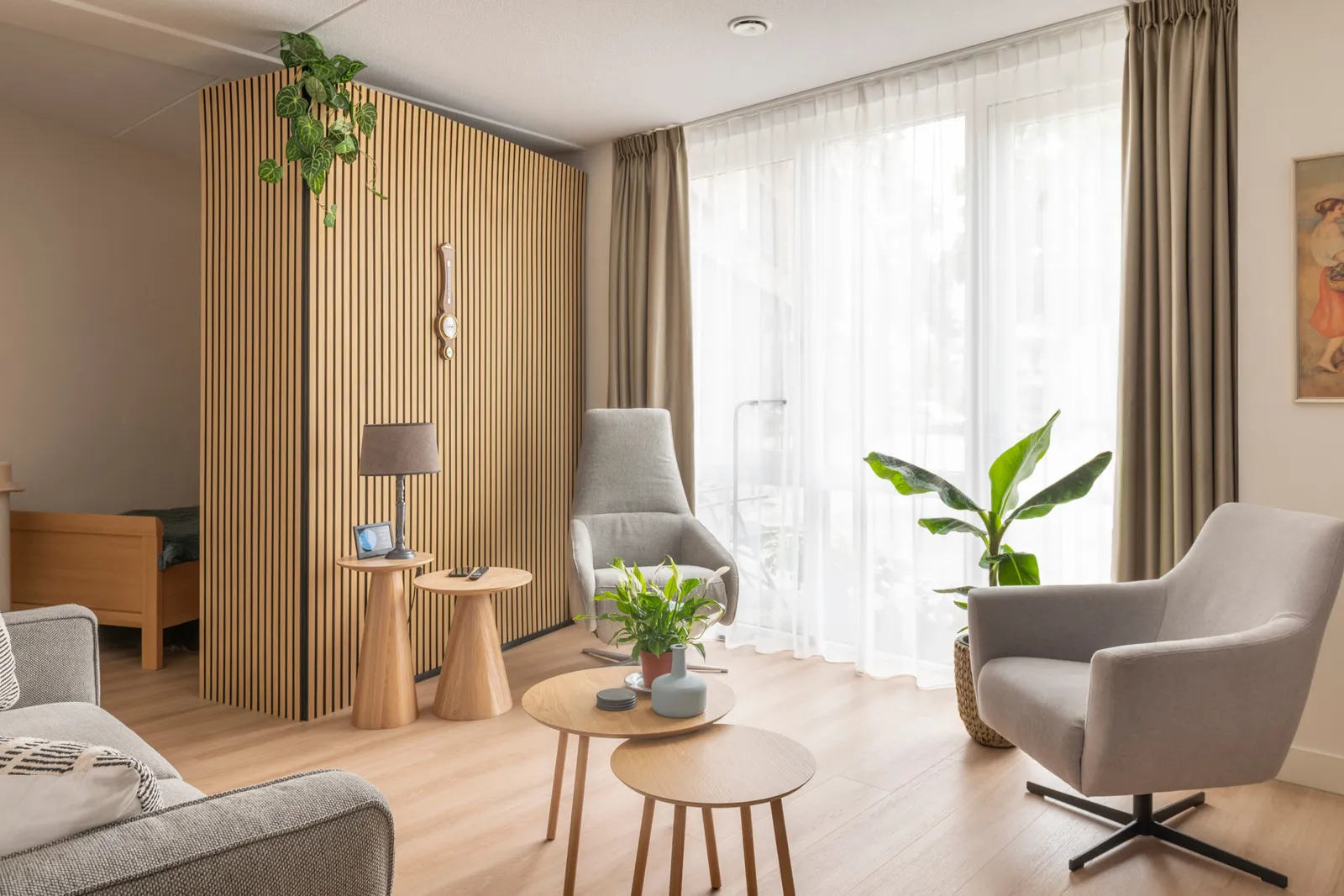
The residential care building ’t Nieuwland in Almelo has little in common with the old residential care homes, then known as homes for the elderly. The floor plans in those old buildings measured 12 to 18 m2, including a washbasin, but had no private kitchen, and bathrooms were shared in the corridor. All the floor plans were also identical and fully standardised according to the requirements of the government agency Bouwcollege at the time. By contrast, ’t Nieuwland offers 42 apartments in a range of sizes, from 25 m2 studios to 54 m2 apartments. Future residents therefore have plenty of choice.
In the neighbourhood
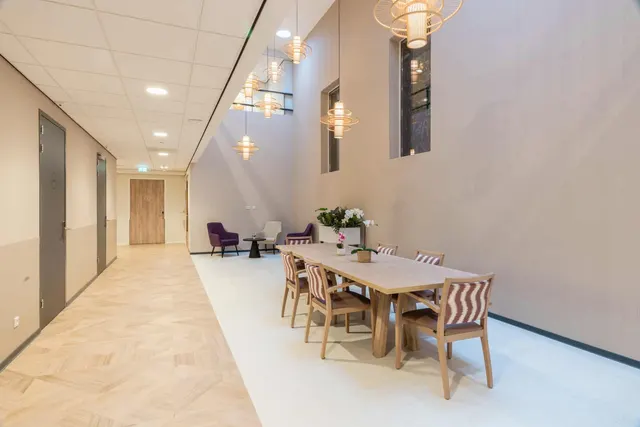
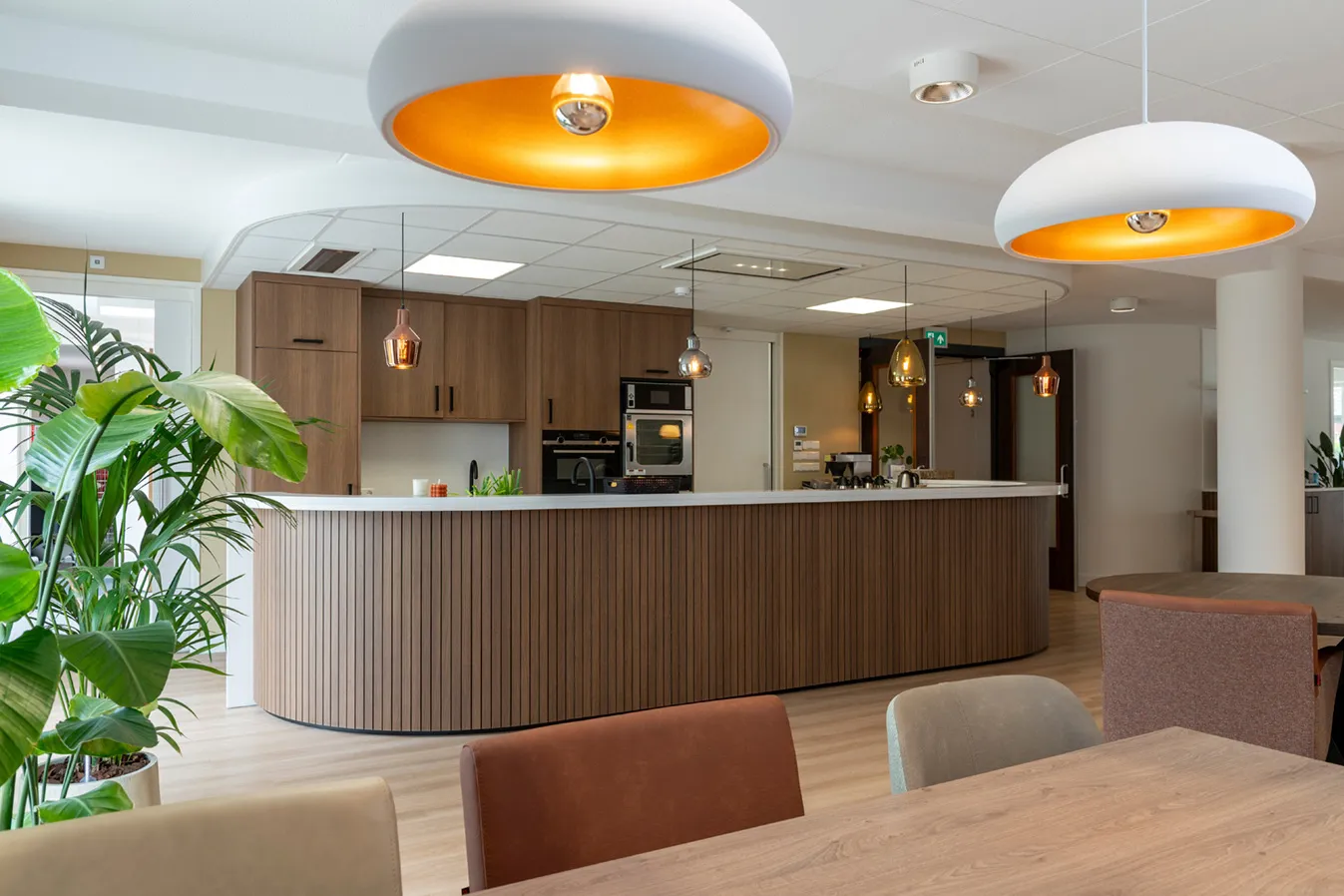
Homes for the elderly were often located on the outskirts of towns and villages. They had an average of around 100 residents and shared facilities such as a dining room, recreation room, kitchen and quiet room. Because of their location, essential amenities were often no longer within walking distance. Residents could no longer simply pop in to see former neighbours from the street where they had lived for years. By contrast, ’t Nieuwland is right in the heart of the De Riet neighbourhood, with four supermarkets within a 15-minute walk and four minutes from the railway station or bus stop. The apartments offer space for independent living, while communal lounges and garden terraces provide places to socialise. That ’t Nieuwland is truly part of the neighbourhood was clear at its official opening, when 32 of the 42 homes were already occupied.
Every target group grows older
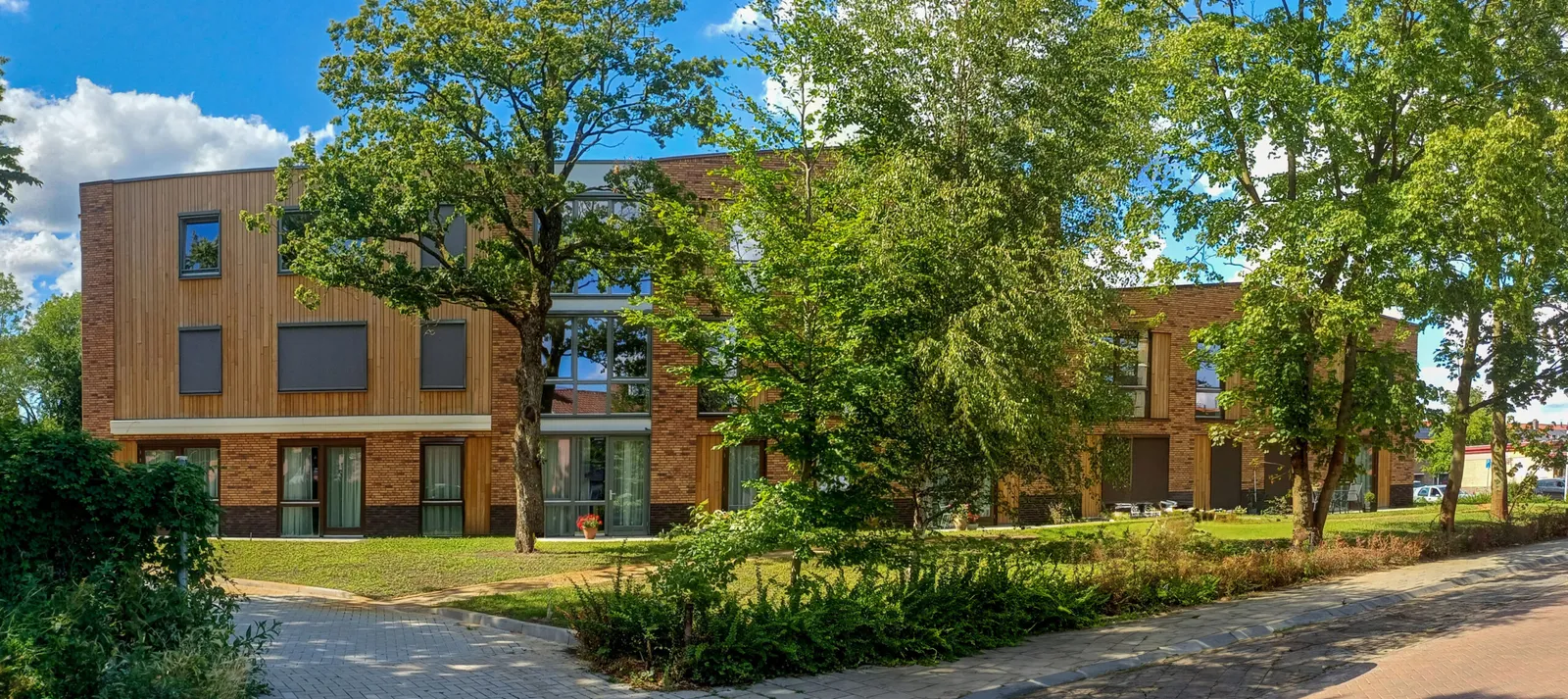
At the time, the government strongly encouraged the construction of homes for the elderly through the AWBZ (Exceptional Medical Expenses Act), introduced in 1968. The emphasis was on efficient use of space, standardisation and care for older people who were still reasonably independent but needed help with housework, personal care or meals. After 20 years, however, the residents’ needs had shifted towards more intensive care, which the buildings had not been designed to provide. Floors were remodelled to make spaces as suitable as possible for wheelchair users and residents with intensive care needs. This is not necessary at ’t Nieuwland. From the outset, the design and organisation have been geared towards 24-hour care. The likelihood that residents will eventually have to move to a nursing home or hospice is therefore small.
Designing for life
Much is written about attractive, sustainable housing projects where older people want to grow old together, often with vegetable gardens and greenhouses. But many of these designs overlook what happens when a once-fit resident eventually needs intensive care or develops dementia. Is the building prepared for this? And will the other residents still be enthusiastic if their fellow residents need intensive care? ’t Nieuwland is prepared for this.
Informal carers can move in too
The number of nursing home places will not increase; this was a deliberate government decision in 2015. Nursing homes are likely to develop further towards hospice care. At the same time, around a third of older people with care needs have dementia, and the population is ageing rapidly. The government’s decision has placed enormous pressure on home care services and informal carers. At present, more than three-quarters of people with early-stage dementia still live at home, often because they and their carer or carers are apprehensive about moving into a nursing home. But staying at home is not an option if the home is unsuitable or the care needs become too demanding. This can lead to dangerous situations, such as aggression, wandering or restlessness in the evenings. Informal carers have to remain constantly vigilant and get no respite.
An intermediate form of housing is therefore essential. Not a return to the old homes for the elderly, but a new type of residential care building such as ’t Nieuwland. Here, the transition is less daunting, and a partner can move in too when someone develops early-stage dementia or has other care needs.
Once again, a meeting place for the neighbourhood
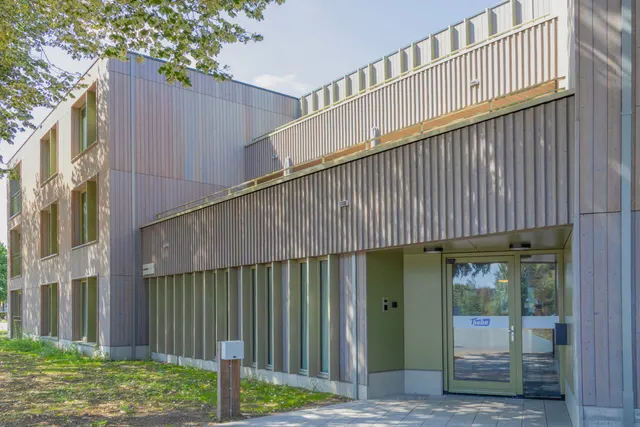
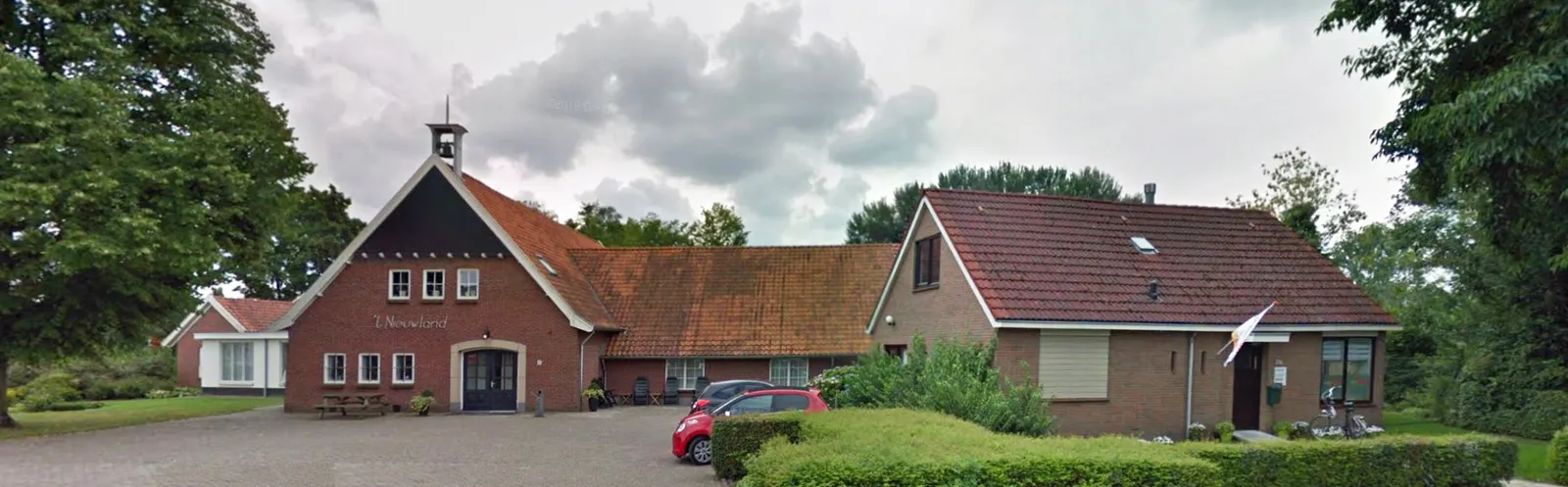
The site at Hoornbladstraat 31 has a special history. A farm, Fikkert, originally stood here. In 1952, it was converted into a neighbourhood centre and church: Het Nieuwland. For many years, it was the social and spiritual heart of the neighbourhood. The church closed in 2009 as visitor numbers declined. The building was converted into a hospice. Now it is once again a meeting place for residents and local people. The name ’t Nieuwland has been retained as a tribute to the site’s long history.
The end of small-scale buildings
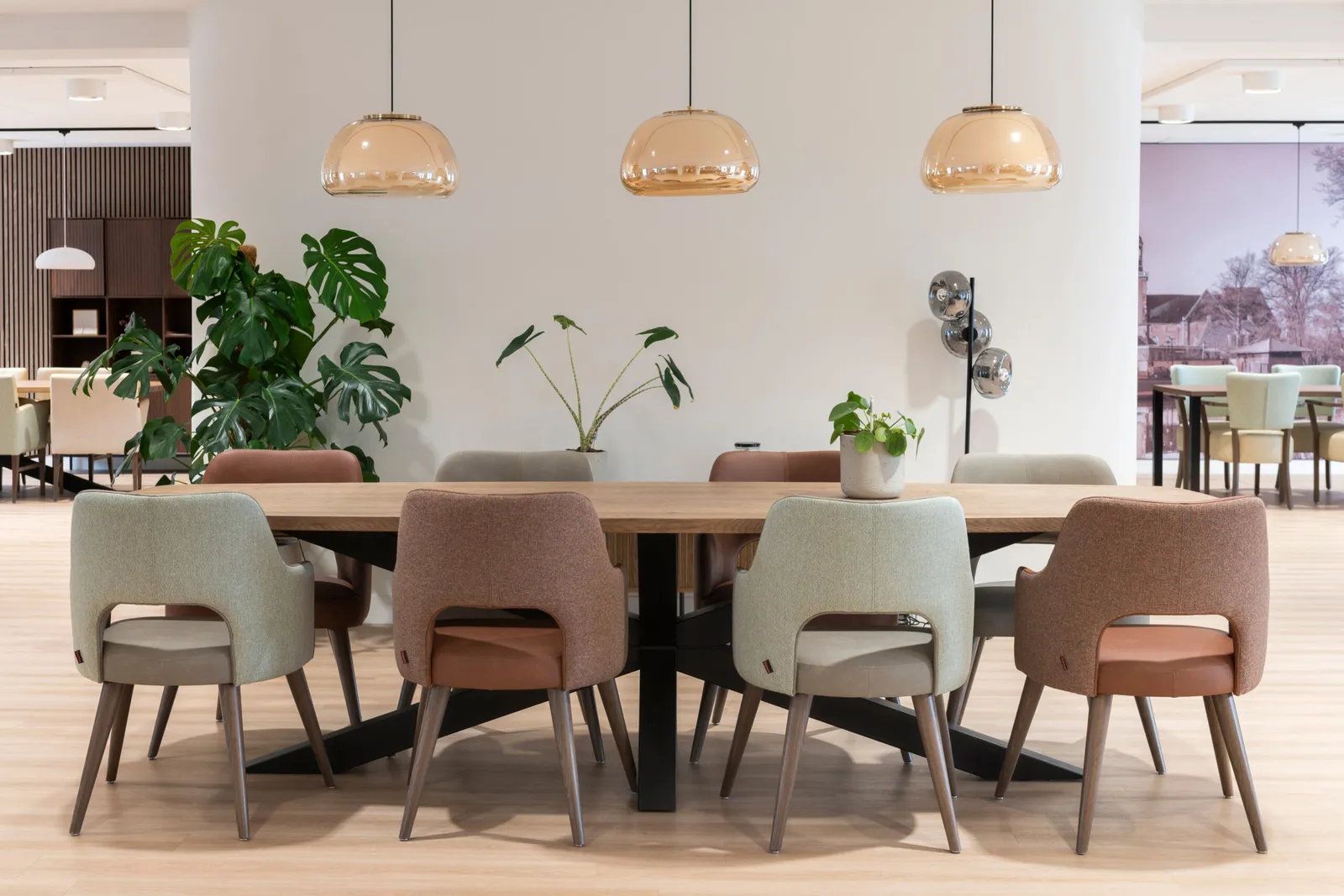
Until recently, the standard was to build small-scale residential care settings with around 24 units for older people with care needs. Their intimate scale was often praised for creating a homely atmosphere, in contrast to the large-scale flats for older people built in the 1960s and 1970s. ’t Nieuwland brings together three existing small-scale communities run by the care organisation Saamborgh under one roof, showing that bigger can also have its advantages. There is more choice: residents can choose from 12 different home sizes. More residents also mean more inviting places to meet, both indoors and out. A larger resident population and a wider range of care needs increase the chances of new friendships forming. Staff no longer have to travel from villa to villa, but work together in one place. This strengthens collaboration and increases the expertise available.
Future-proof living
Longing for the ‘good old days’ of homes for the elderly is nostalgia. These buildings no longer meet the needs or standards of today in any way. The old nursing homes, which had the same layout as hospitals, with rooms for two or four people, have also either been transformed or demolished. Now that the government no longer funds new nursing homes, apart from replacement construction, and homes for the elderly have disappeared, the gap between home and nursing home has become too wide. The policy of keeping people at home for as long as possible also means that people with dementia remain in unsuitable situations for too long, placing an enormous burden on informal carers. ’t Nieuwland fills that gap. It is an ideal intermediate option, where the move from home is less disruptive than moving into a nursing home.
The site is in a familiar neighbourhood, close to neighbours and amenities. Residents can choose the size of their home, move in with their partner and enjoy inviting indoor and outdoor spaces surrounded by greenery. At the same time, the care they need is readily available, without unnecessarily restricting their autonomy. A new kind of home for older people is coming into view, pointing the way to the future: the residential care building ’t Nieuwland in the De Riet neighbourhood of Almelo.
Facts & figures
- Client: Carebeek
- Investor: Care Property Invest
- Operator: Saamborgh
- Architect: Lengkeek Architecten en Ingenieurs
- Contractor: Bramer Bouw & Vastgoed
- Interior design: Olea Zorgvastgoed
- Completion: June 2025
Question about this story? Ask your question
Keep following this
Get an email when a new story is published. No account needed.
- SubjectResidential care & nursing homes