











2,000 solar panels installed on the roofs of UVC Brugmann and Queen Fabiola Children’s University Hospital
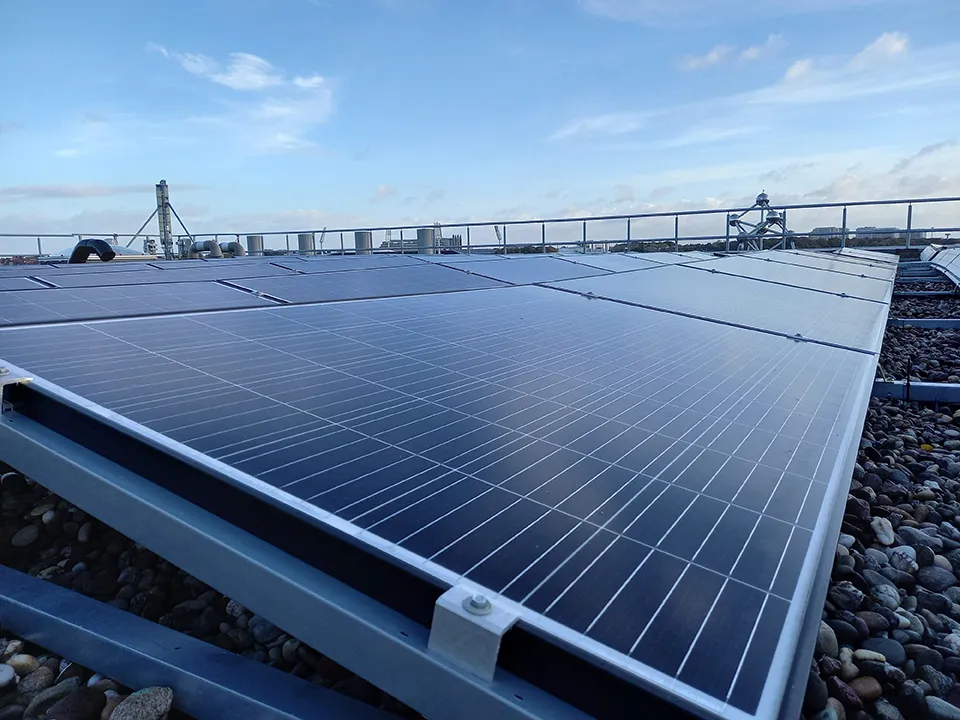
Today, as part of European Sustainable Energy Week (25-29 October), the new solar farm on the roofs of Queen Fabiola Children’s University Hospital (HUDERF) and UVC Brugmann was officially opened. The project, supported by the European Regional Development Fund (ERDF), marks the culmination of a series of initiatives undertaken over the past 20 years to limit the environmental impact of the two hospitals.
A further step forward in nearly 20 years of environmentally responsible hospital management
At the Horta site, 2,000 carbon-neutral photovoltaic panels manufactured in Belgium have been installed on the roofs of HUDERF and UVC Brugmann. The solar farm, covering no less than 3,000m², or 12 tennis courts, completes a series of projects, audits and works undertaken since 2003 to focus on the rational use of energy and self-generation, thereby reducing the environmental impact and energy bills of energy-intensive care activities.
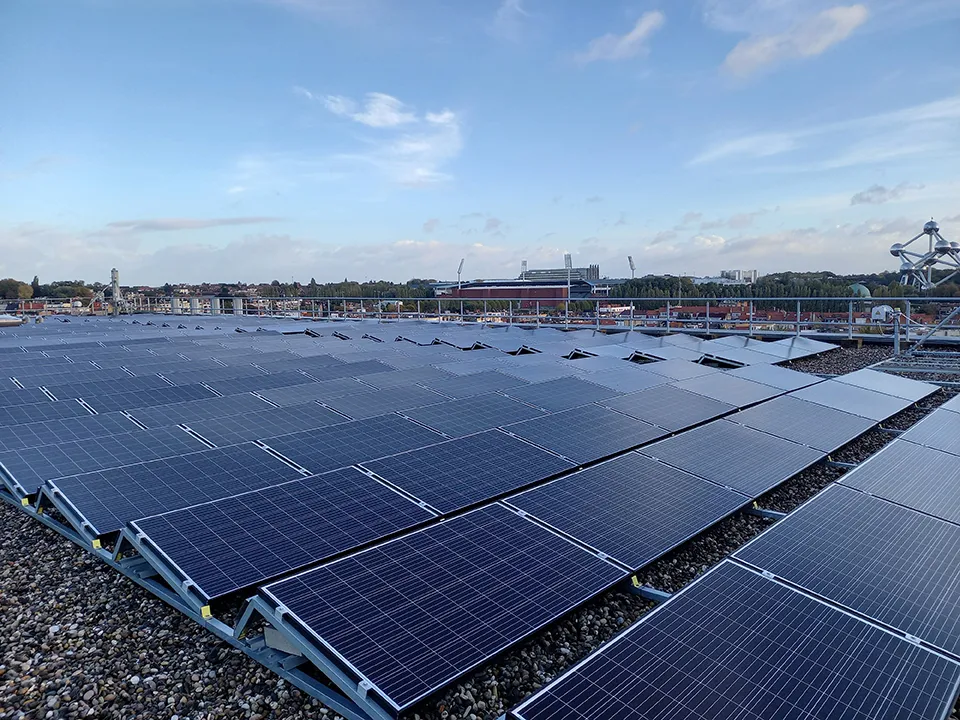
3,000 m² of solar panels
The electricity generated by the photovoltaic panels works perfectly alongside the existing combined heat and power plants at the Horta and Brien sites. This allows a significant share of the additional daytime demand to be met, particularly in summer, when the need for cooling, and therefore electricity, is greater. The solar farm is expected to generate 536 MWh/year, equivalent to the electricity consumption of 180 Brussels households. The hospitals expect this to reduce their carbon footprint by a further 2%.
The project, partly funded with support from the ERDF (172,500 euros), has a total cost of 725,000 euros. The solar panels are expected to save the hospitals 100,000 euros in energy costs each year.
A sustainability policy for the community
Since 2003, seven new buildings have been constructed at the Horta site. The aim was not only to create a better hospital and working environment for patients and staff, but also to support growing activities responsibly. However, after the first two buildings came into use, energy consumption rose sharply. An audit by Brussels Environment in 2006 acted as a catalyst for revising the designs of the subsequent buildings. Measures including improved insulation, energy recovery systems and better-adapted, more controllable technical installations dramatically improved energy performance.
Energy monitoring to identify excessive consumption
Between 2007 and 2009, Brugmann University Hospital took part in Brussels Environment’s “PLAGE” project. Financial support enabled the introduction of energy monitoring, allowing consumption and potential overconsumption to be measured accurately and adjusted where necessary. For example, the steam network was entirely decommissioned and replaced with smaller, more efficient local production units.
In 2008, a pilot project was launched to maximise shared renewable energy. As part of a neighbourhood partnership, the facilities at Paul Brien Hospital are shared with DBDM (the Fire and Emergency Medical Assistance Service of the Brussels-Capital Region), Huis van het Werk and the Schaerbeek Public Social Welfare Centre (OCMW) as part of an energy-efficient expansion project.
Heating the Horta site, which comprises around 40 buildings, some a hundred years old and listed as heritage sites, is a challenge. Since 2016, the hospital has operated its own combined heat and power plant, generating 1.5 MW of electricity and recovering the heat for the site’s heating network. The boilers have also been replaced, and the network optimised and better insulated. Together, these efforts have reduced heat consumption per square metre by 35% over the past 15 years.
Cool buildings with ‘free chilling’ and nature
During the winter months, the hospitals use ‘free chilling’, or cold outside air, to cool areas such as the IT server room and hospital corridors naturally, rather than using other electric cooling systems. Nature also lends a hand: the Horta site is located in an 18-hectare park, which provides pleasant relief from the heat in the heart of the city.
Following the renovation and insulation of a large proportion of the roofs at the Horta site with the help of Beliris grants in 2015, green roofs were installed at the site in 2019.
Reducing the financial impact of energy: monitoring consumption
The gas-fired combined heat and power plant alone saves the Horta site up to 1 million euros, while the solar panels deliver additional savings of 100,000 euros a year. Even so, the site’s total energy bill still stands at 3 million euros a year. Costs therefore remain high, meaning that even savings of a few per cent can make a big difference to the final bill.
Question about this story? Ask your question
Keep following this
Get an email when a new story is published. No account needed.
- ThemeSustainable healthcare buildings
- SubjectGeneral







