











Athena paves the way for reusing real-world data in healthcare
Text Koen MortelmansImage Project Athena
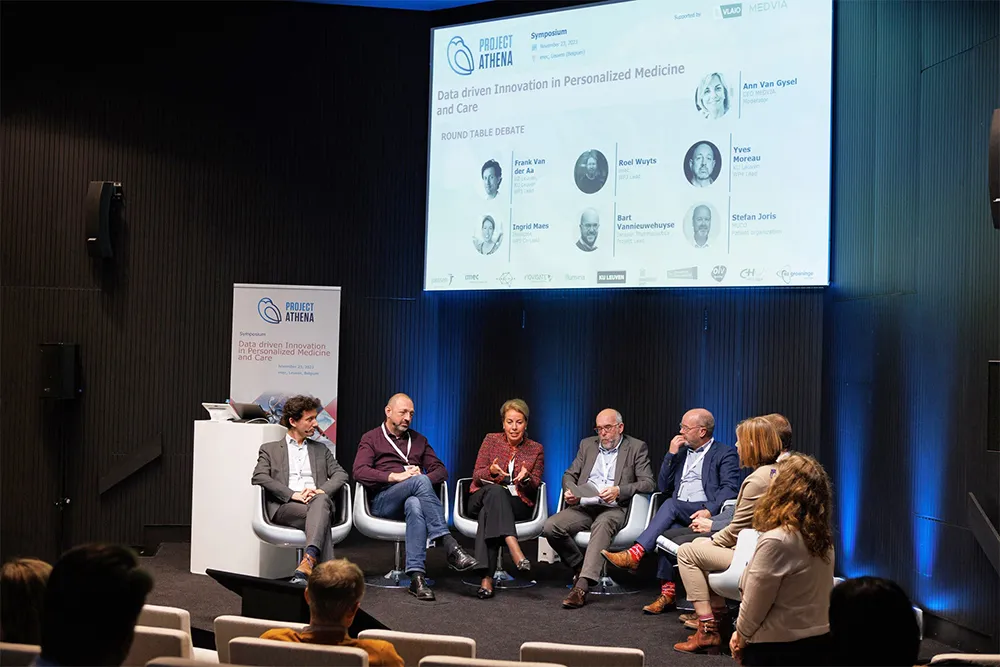
Athena, a multi-stakeholder project funded by the Flemish government, has made significant progress in oncology. This was achieved by developing innovative machine-learning techniques that can analyse patient data while protecting privacy. The project results were recently presented in Leuven.
Athena is paving the way for greater reuse of real-world data in scientific research and healthcare. Hospitals and other healthcare institutions collect huge amounts of patient data every day, or real-world data (RWD), such as medical records, imaging data and laboratory analyses. These data can yield life-saving insights when used in research.
“RWD is a valuable source of knowledge that can support and catalyse research in various fields,” says Roel Wuyts, research and development manager at imec and professor at KU Leuven. “By using RWD to identify patterns, we can better assess the effectiveness and safety of treatments and work towards personalised medicine.”
Closing the gap
Although Belgium was long a pioneer in the use of electronic patient records and a historic leader in implementing clinical studies within the EU, it is currently lagging behind in the reuse of RWD. Several urgent challenges need practical solutions to improve opportunities for data reuse, including data standardisation and the security and privacy of patients. Athena (Augmenting Therapeutic Effectiveness through Novel Analytics) provides essential building blocks for addressing these challenges.
Over three years, Athena partners developed innovative models to unlock, align and integrate data. They used two conditions as case studies: multiple myeloma and bladder cancer. With federated data management, patient data remain secure within the hospital environment. Rather than collecting data and performing machine-learning operations on the data as a whole, analyses are carried out on data that remain at hospital level. “We guarantee complete patient privacy by carrying out analyses on site and sharing only patterns and insights,” Wuyts explains.
Question about this story? Ask your question
Keep following this
Get an email when a new story is published. No account needed.
- ThemeSustainable healthcare buildings
- SubjectGeneral







