











Decontaminating and recycling hazardous medical waste
Text Valérie CouplezImage Blue2Green Recycling
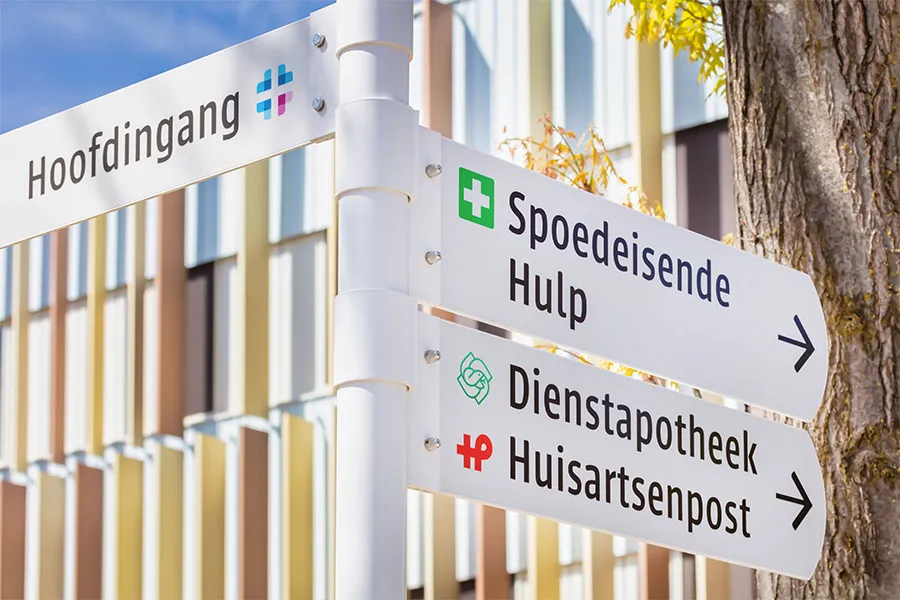
The healthcare sector’s environmental footprint in the Netherlands is enormous. It is responsible for around 7% of greenhouse gas emissions, 4% of waste and 13% of raw material consumption. Its impact is therefore significant, and the same is true of Flanders, where we face exactly the same challenges. At present, incineration is the only option for hazardous medical waste. Blue2Green Recycling now wants to change that. The first facility is due to start operating early next year, decontaminating and recycling medical waste and helping the healthcare sector reduce its environmental footprint.
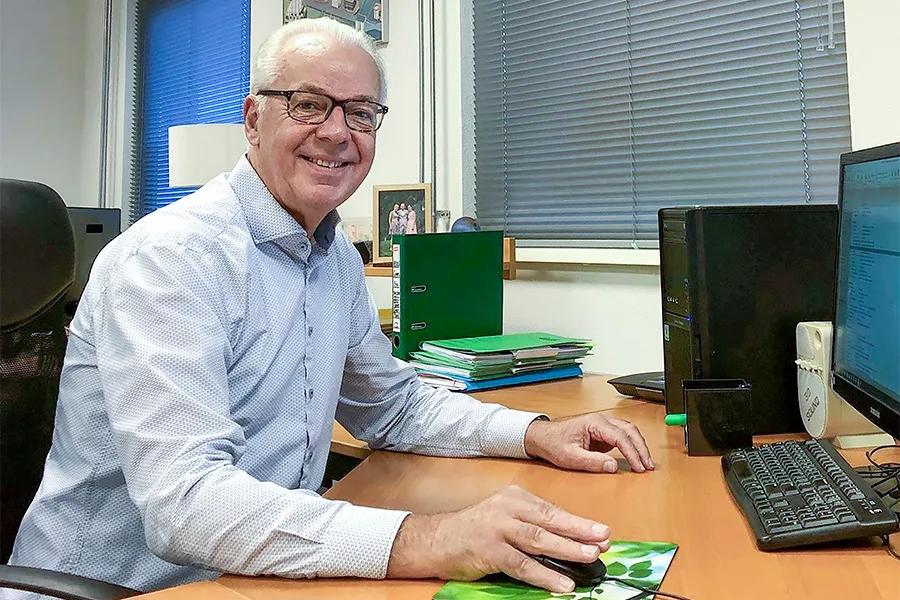
Under the Green Deal Samen werken aan duurzame zorg, the Dutch healthcare sector has set itself highly ambitious targets. By 2030, it aims to cut CO2 emissions by 55% and reduce primary raw material consumption by 50%. “It can only achieve this mission by putting the mountain of hazardous medical waste it currently produces to good use,” says Cees Duijn, managing director of Blue2Green Recycling. The healthcare sector itself is also keen to see action, but no initiatives have emerged so far.
Knowledge and experience from three companies
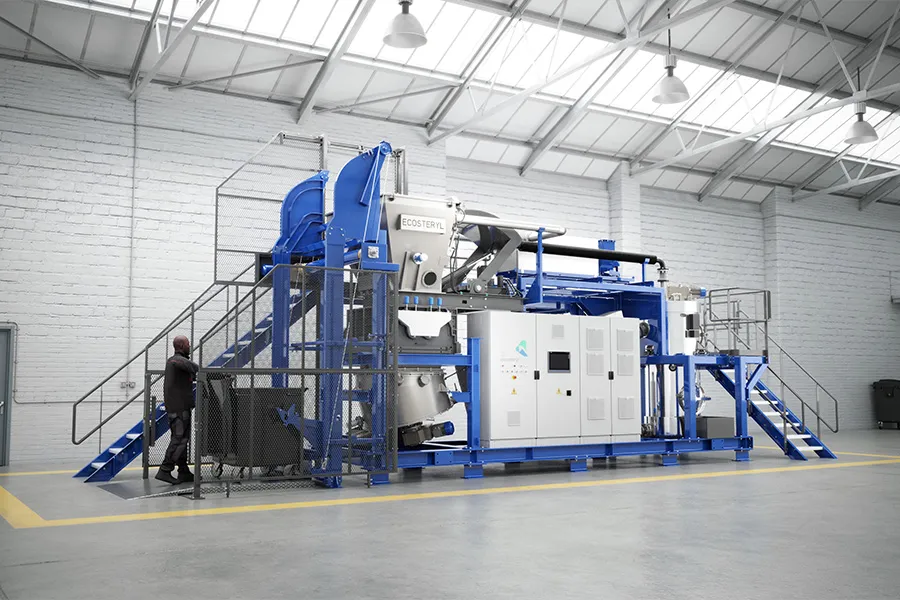
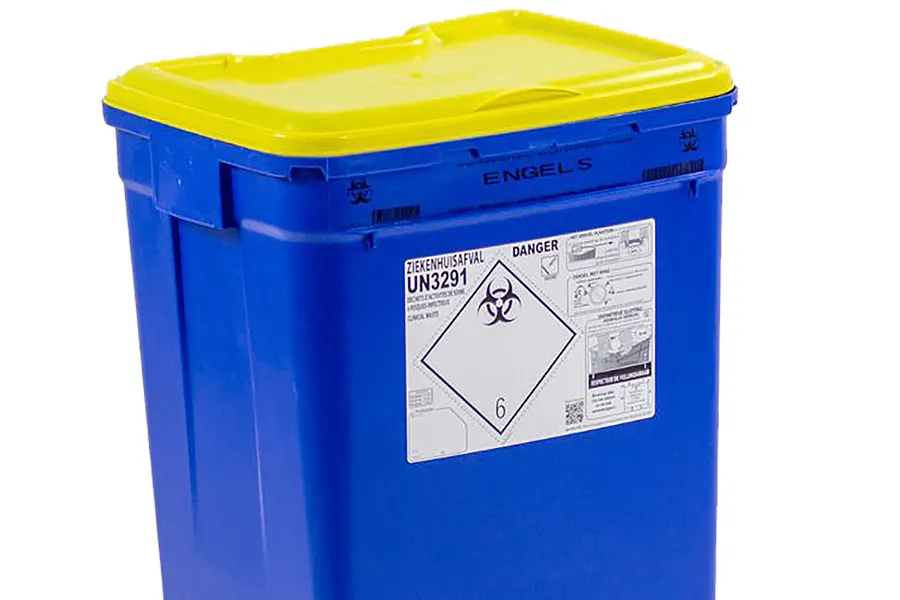
The creation of Blue2Green Recycling is set to change that. Duijn says: “The name was chosen deliberately. Hazardous medical waste is currently disposed of in blue containers that go into the incinerator. We want to shift to a more sustainable, greener solution.” The starting point is the decontamination technology developed by Ecosteryl in Bergen, distributed in the Netherlands by its sister company Du-Con Trade. The expertise of another sister company, InnoMax, will also be brought in to deliver an end-to-end solution that not only decontaminates the material but also recycles it, allowing it to be put to useful use again.
Annual CO2 savings of 3 kilotonnes per platform
Initially, this will be done from five platforms in the Netherlands, giving hospitals and other healthcare institutions a central collection point for their hazardous medical waste within a 50 km radius. “Each platform will be able to process 3,000 tonnes a year, which should result in a CO2 reduction of 3 kilotonnes every year. That is a huge gain for the healthcare sector in meeting its targets. Unfortunately, it will not be possible to close the loop completely. For now, recycled material cannot be used in medical or food applications. But it can still be given a useful second life. These are materials, metals and plastics, that we will urgently need,” says Duijn.
Bringing four innovations together
The first platform will be located in Velsen-Noord, bringing together four innovations. Duijn says: “The first is Ecosteryl’s technology. These units have a capacity of 250 kg/hour and have already proved themselves in 60 countries. Strangely, though, nowhere in the Benelux. It takes considerable effort to scrutinise the legislative framework and meet all the requirements.” The second innovation is InnoMax’s recycling technology. “It will recycle the decontaminated fraction into RDF fluff, ferrous metals, an inert glass and ceramic fraction, and various grades of plastic (PP, PE and PVC). The next steps will be handled by specialist processors with whom we are entering into partnerships.” The third innovation is the dashboard Blue2Green Recycling will develop, allowing each healthcare institution to see exactly how much waste it has delivered and how much CO2 it has saved as a result. “Finally, we will also eliminate odour nuisance using non-thermal plasma. That is our fourth innovation.”
Up and running next year
The plan is to start operating in the first quarter of 2024 and fine-tune the process, so that the facility is running at full capacity by the middle of next year. Meanwhile, Blue2Green Recycling will also have started construction of a second platform in West-Brabant. “We are being driven forward by the positive energy coming from the healthcare sector. Although our technology currently costs more than incineration, the CO2 savings it can deliver are a huge driving force. We want to set the minimum standard for hazardous medical waste, so that incineration is only needed in exceptional cases. Initially in the Netherlands, but we hope to extend this initiative to Belgian healthcare institutions too,” says Duijn.
Question about this story? Ask your question
Keep following this
Get an email when a new story is published. No account needed.
- ThemeSustainable healthcare buildings
- SubjectGeneral







