











Sustainable comfort, with residents benefiting every step of the way
Like it or not, we will have to make ever greater savings on our energy use. In five years’ time, we will even be required to build energy-neutral homes. This will require additional investment. New-build homes below the (capped) rent allowance threshold will then be impossible, creating tension around the development of separating housing from care. An increasing number of care properties will have to be let below the rent allowance threshold. This means tenants will benefit from lower energy costs.
Even if we build energy-neutral homes and the energy meters were to remain at zero, energy still costs money. An electricity connection costs money, water costs money, and maintaining or replacing a central heating boiler, water heater and/or hot-water tank costs money. In short, even energy-neutral homes come at a cost. In addition, building energy-neutral homes requires greater investment.
How wonderful would it be if we could already be building new energy-efficient apartments below the rent allowance threshold? Apartments that meet the 2020 requirements and also give tenants lower costs?
A pioneering example
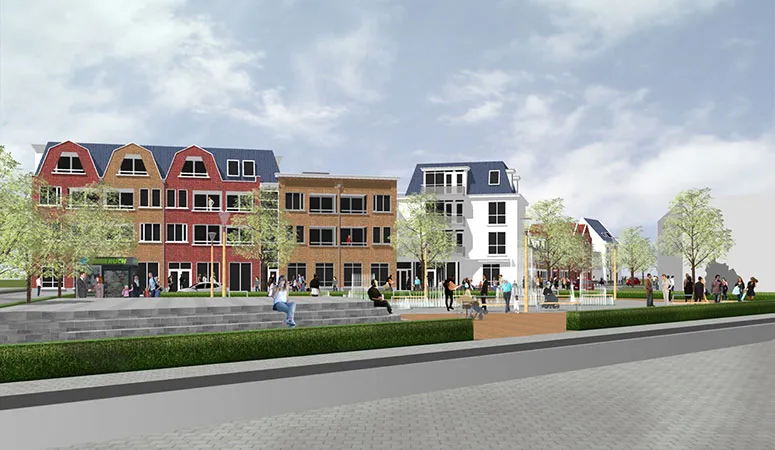
Care apartments of this kind are now set to be built. We’ll take you through a real-world example of how we are making this happen. The care apartments have no gas connection, but do have an electricity connection. They have comfortable heating and cooling, and, of course, a comfortable supply of hot water. They are fully energy-neutral and therefore highly sustainable. The total cost of consumption is just € 90 per month. Taking into account that normal usage also generates more than € 10 per month, total costs fall to a maximum of € 80 per month.
We are using a combination of proven systems that meets the expectations of even the most demanding resident. This integrated concept has not previously been used in care housing, but has already been successfully implemented in a range of other types of housing.
An exceptionally comfortable indoor climate, with more than half an hour of continuous showering… No problem. If someone unexpectedly wants to shower for longer, a single press of a button doubles the shower time. The cost of pressing the button is
€ 0,20 per ‘extension’. Its primary purpose is to encourage users to be mindful of normal energy consumption. This approach has proved highly successful, for example, in student accommodation. Requests to pay for an extension are rare there.
How it works
How do we make this happen? Naturally, we start by ensuring excellent insulation. This creates a highly comfortable indoor climate. It can be freezing in winter, warm for extended periods in summer, and even humid. Ceiling heating and cooling, together with carefully designed, draught-free ventilation, provide a high level of comfort, a homely warmth and effective cooling when needed. Sustainable, affordable and comfortable for residents.
Each apartment has its own solar panels, with the energy generated credited to the individual electricity connection. As a small-scale consumer, the user does not have a dual-rate meter (with day and night rates). As a result, the government pays residents an annual tax rebate of approximately € 390. After connection charges have been deducted, this still leaves € 120 or more per year. The apartment’s heating and cooling system uses heat extracted from and returned to the ground. This solution is only cost-effective in buildings with multiple storeys. Solar panels and heat from wastewater are used to provide additional electric water heating.
Already meeting the 2020 standards
This real-world example already meets the standards that will apply to new-build homes from 2020. We are doing this because it benefits residents now, too. A resident moving in from home or a care home cannot afford high energy and service charges on top of the rent, which is below the rent allowance threshold. These apartments keep residents’ costs low without compromising on comfort or quality. By involving all stakeholders from the outset of the planning process, we developed an integrated solution that brings together the best of all worlds.
To recap:
Ceiling heating and cooling provide sustainable energy use alongside the highest possible level of comfort. Residents experience radiant heat from above, similar to the natural warmth of the sun. This provides comfort without draughts.
No annoying background noise from ventilation systems circulating warm or cool air.
The option of natural ventilation without immediately disrupting the system.
Extra hot water at the press of a button if a comfortable half-hour shower is not enough.
Very low fixed costs and electricity consumption that, with normal use, can even generate money over the course of a year.
By incorporating and funding this smart, integrated solution at the planning stage, we have been able to deliver this innovation within the financial limits.
Question about this story? Ask your question
Keep following this
Get an email when a new story is published. No account needed.
- ThemeSustainable healthcare buildings
- SubjectGeneral







