€15 million extra for Huizen van het Kind
Text Koen Mortelmans Image Thomas Defour, Jostijn Ligtvoet, Mike Van Bemmelen and Eurostat

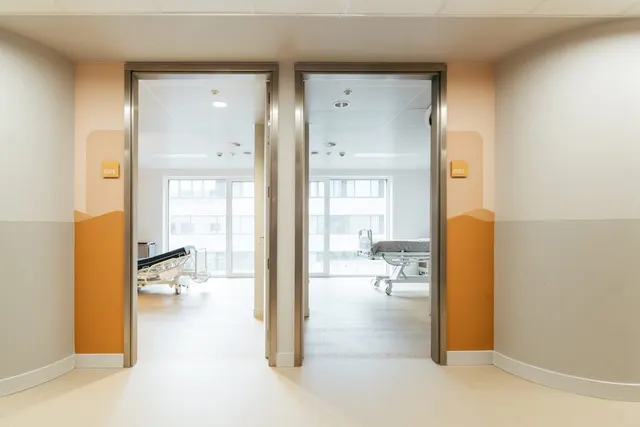
From 2029, every Flemish family with questions about raising children will be able to turn to a local Huis van het Kind. Minister for Welfare Caroline Gennez is setting aside €15 million a year to reform the existing Huizen van het Kind.
The Huizen van het Kind have been around since 2015. There are currently 220 operating in Flanders and Brussels, but families do not always know where to find their local Huis van het Kind. Gennez therefore wants to raise their profile and expand their services and accessibility. At present, these still depend too much on where you live. In some places, a Huis van het Kind is a fully fledged community hub; elsewhere, it is little more than a service desk open for a few hours a week.
More information: www.huizenvanhetkind.be

More professions eligible for the National Care Reserve
Anaesthesia associates, medical imaging and radiotherapy specialists (MBB'ers), emergency medical care providers, dental hygienists, educationalists, psychomotor therapists, applied psychologists and spiritual care providers can now also register as care reservists with the Dutch National Care Reserve.
Discussions about crisis preparedness often quickly turn to hospital capacity or medicine stocks, while the mental and spiritual impact of a crisis is often overlooked. That is precisely why the National Care Reserve is now expanding in a targeted way. “This expansion will allow us to respond more broadly and flexibly to what a crisis demands, from acute care to mental and spiritual support,” says Charlotte de Schepper, director of SES (Stichting Extra Samen), which runs the National Care Reserve. “By recruiting people with the skills most likely to be in short supply during a crisis, we can keep the network of care reservists broad, diverse and ready for whatever comes our way.”
More information: https://wij.nationalezorgreserve.nl, https://s-e-s.nl
Hip fractures on the rise in the Netherlands
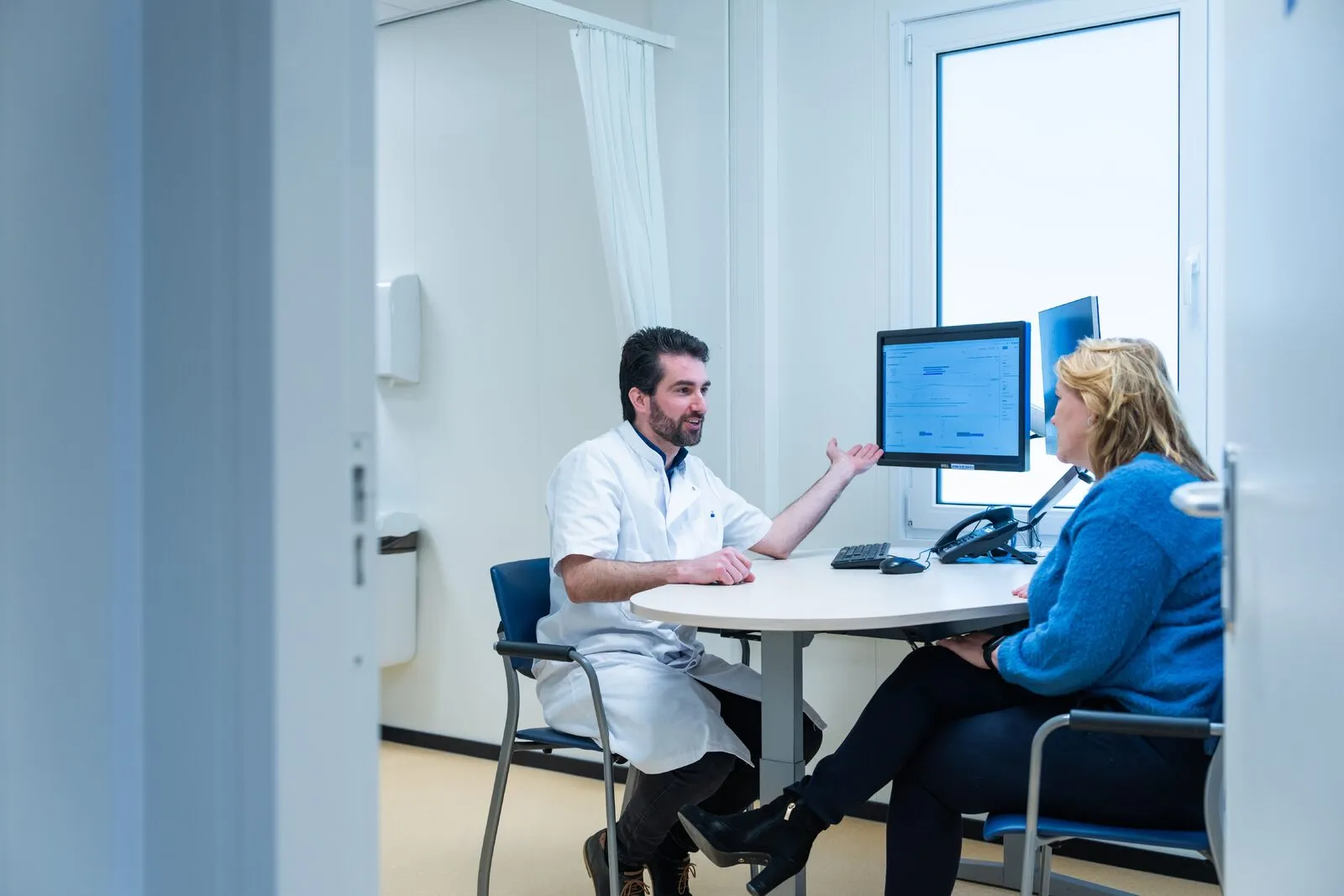
The number of patients who fractured a hip in the Netherlands rose by 14% between 2021 and 2025, according to an analysis by the Dutch Hip Fracture Audit (DHFA). Of these patients, 75% were admitted from home, compared with 69% in 2018. At the same time, the proportion admitted from a care home fell from 19% to 10% between 2018 and 2025.
Staff shortages, changes to healthcare legislation and a shrinking number of residential care homes mean that older people are staying in their own homes for longer. Although living at home does not automatically increase the risk of a hip fracture, older people who continue to live independently for longer are more likely to fall if their homes have not been adequately adapted.
The Netherlands is ageing rapidly. By 2040, a quarter of the population will be aged 65 or over. Despite this ageing population, the figures indicate that patients have become more self-reliant. The proportion of patients who need help with daily activities fell from 43% to 32% over the same period. The patients’ average age fell from 82 to 80. The figures also showed that hip fracture patients were more often women (64%) than men (36%). This split has remained virtually unchanged in recent years.
More information: www.dica.nl
The Netherlands has relatively many long-term care beds and few hospital beds
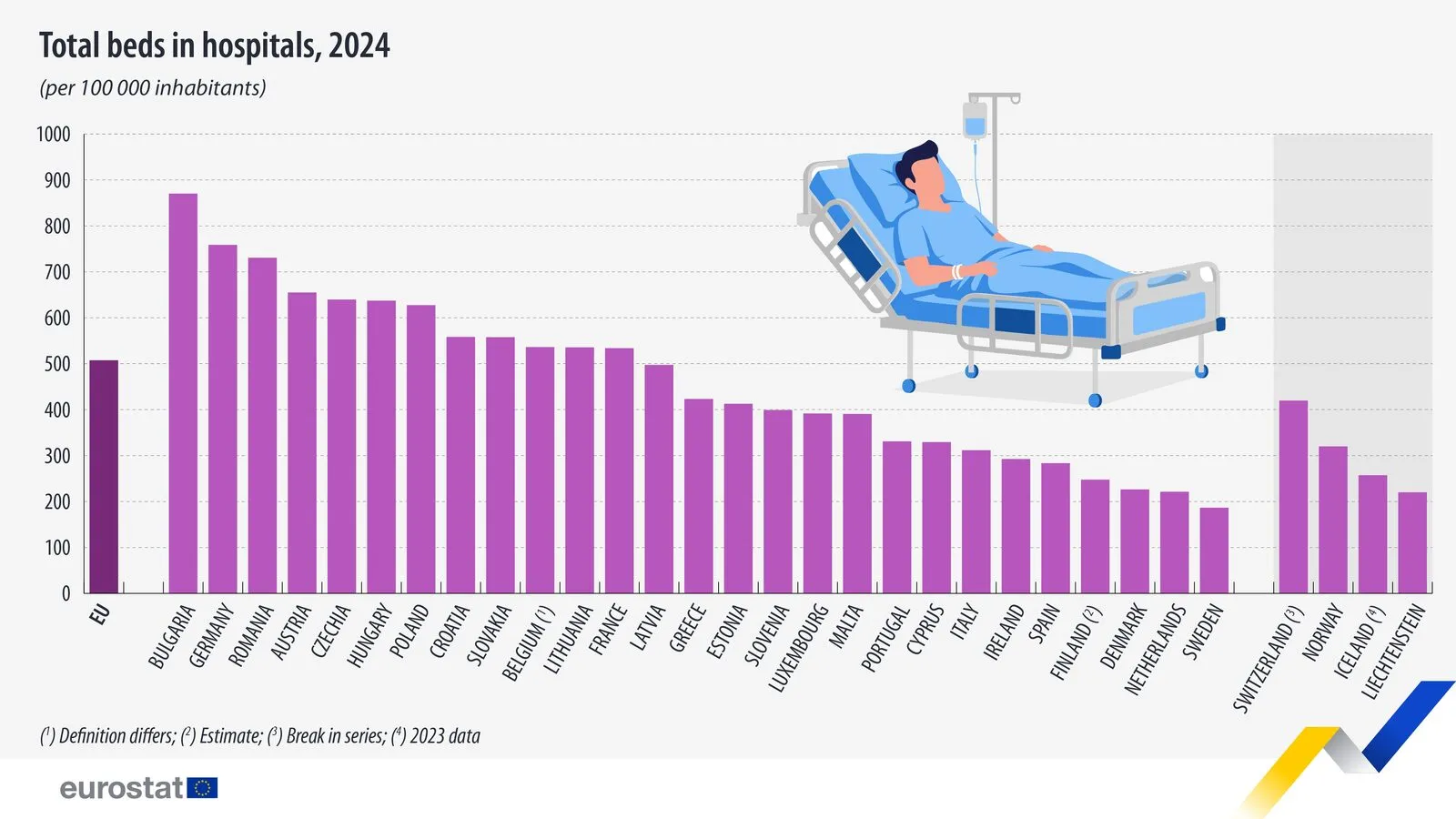
In 2024, the EU had 507 hospital beds per 100,000 inhabitants, a slight fall from 511 in 2023. The annual decline from 582 in 2009 reflects the impact of scientific and technological advances, which have shortened the average length of stay for many hospital admissions or replaced them with outpatient or day treatment.
Bulgaria had the highest number of hospital beds relative to its population, at 870 per 100,000 inhabitants, followed by Germany (759) and Romania (731). Six countries had fewer than 300 hospital beds per 100,000 inhabitants: Sweden (187), the Netherlands (221), Denmark (226), Finland (248), Spain (283) and Ireland (293). Belgium had 536 beds, but rehabilitation beds were excluded from this calculation.
Within the EU, the Netherlands had the highest number of beds in nursing and other residential long-term care facilities per capita in 2024, at 1,390 per 100,000 inhabitants. Sweden (1,298) and Belgium (1,249) ranked second and third.
More information: https://ec.europa.eu/eurostat
Question about this story? Ask your question
Keep following this
Get an email when a new story is published. No account needed.
- SubjectNews