From standardised care institutions to housing for older people with care needs
Text Robert KromhofImage Robert Kromhof
25 years of building for care
25 years ago, care homes for older people (the term then used for residential care complexes) and nursing homes from the 1960s and 1970s were being renovated or demolished. These care buildings had been planned from the top down and in every detail by the government. All plans had to be submitted to the Bouwcollege, which determined whether they met the prescribed standards. The uniformity of all the buildings shows that the Bouwcollege saw older people at the time as two homogeneous groups. The first group could still manage reasonably well, and care homes for older people were built for them. The second group needed 24-hour care and ended up in nursing homes.
Care home for older people
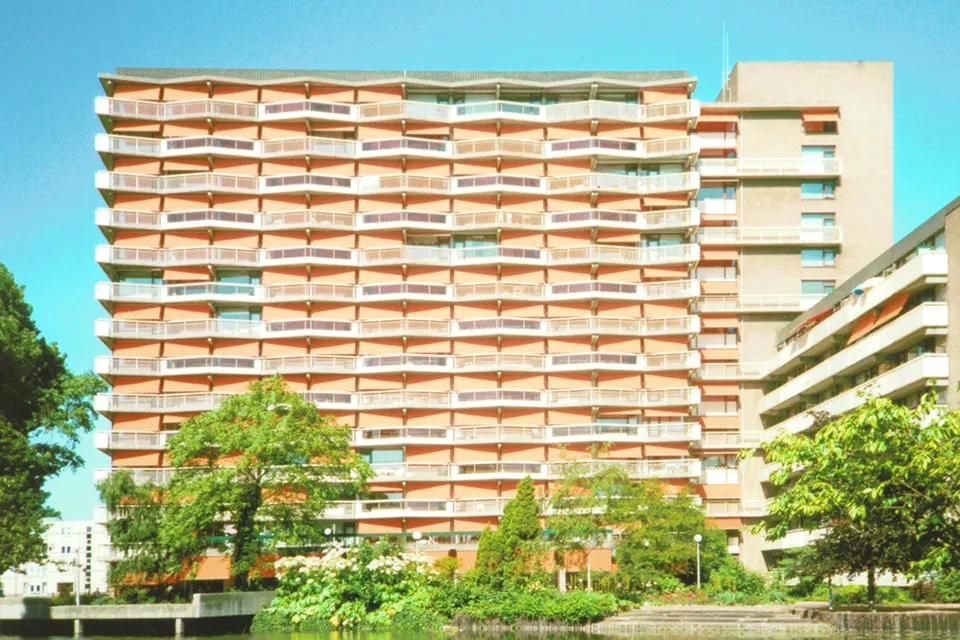
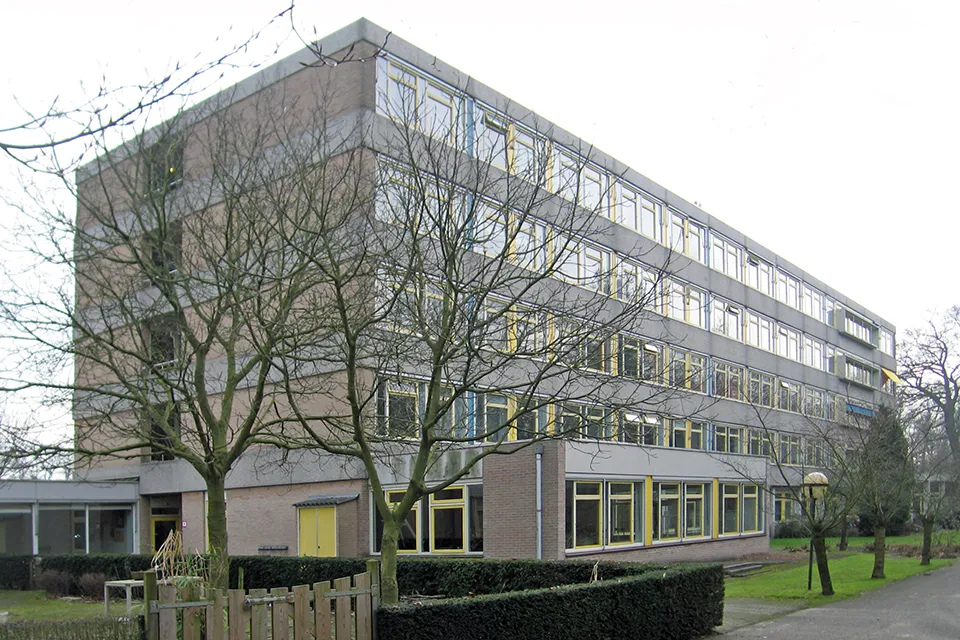
A fine example of a care home for older people can be found in Rotterdam. 25 years ago, a care home dating from 1974 was renovated here. The 259 residents of Hoppesteyn took the lift to one of the 12 residential floors. On leaving the lift, they found themselves in a long, anonymous corridor lined on both sides with doors. Daylight came into view only at the very end of the corridor. Behind each door, residents had exactly 23.7 m2 at their disposal: a small hall with a 90 cm worktop, a toilet with a washbasin where they had to wash not only their hands but also their bodies, and a living/sleeping room 5 m deep and 3.4 m wide. Residents who wanted to look out at the street from their chair by the window looked onto a 1.5 m-wide concrete gallery. Both the living space and visual contact with the outside world were very limited.
The way care institutions were organised at the time was comparable to that of other public institutions, such as schools and prisons. Older people were at the mercy of the institution’s daily staff routine, and the use of the spaces met the staff’s needs more than those of the residents.
Breaking free from imposed standards
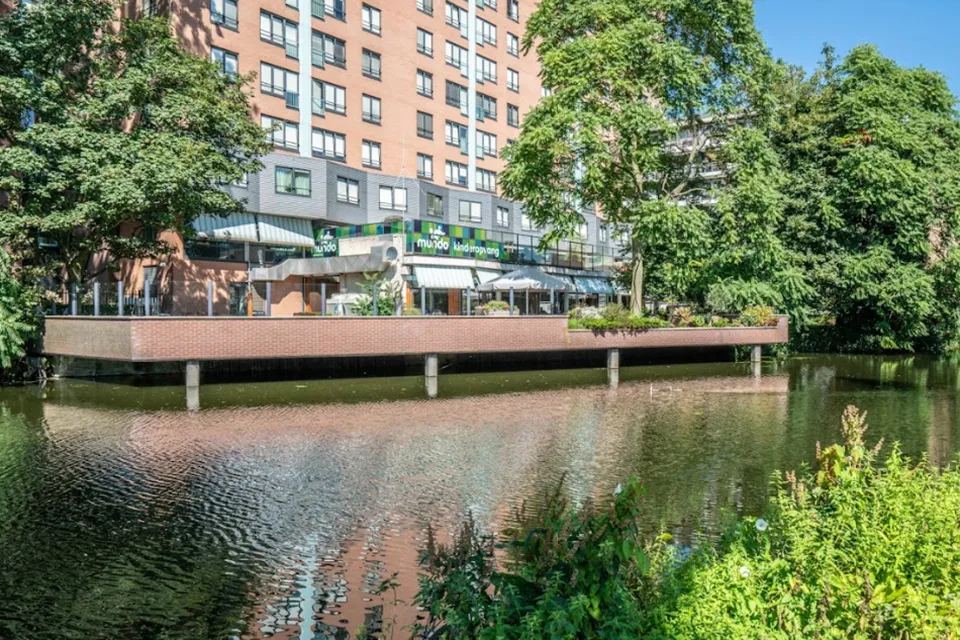
For the renovation plan for Hoppesteyn, both residents and staff were consulted. Both groups were able to offer specific criticism of a show apartment that had been built in advance. The client successfully departed from the imposed standards, giving residents a living room, bedroom and bathroom. The window-cleaning gallery was removed, so residents could look out onto the street and, on the other side, the Boezemsingel. A childcare centre was established on the first floor, with a play area on the roof of the communal room and restaurant. This brought children and older people together. In 2000, a 26-storey tower was added to Hoppesteyn, with a care access point on every floor.
Nursing home
The former nursing homes were not much better. People who needed 24-hour care ended up in nursing homes, which were comparable to hospitals but without the expensive equipment and surgeons. Having four or two beds in a room, with a curtain drawn around each bed to provide visual privacy, was quite normal. The last thing people with dementia saw in those days was probably the suspended ceiling.
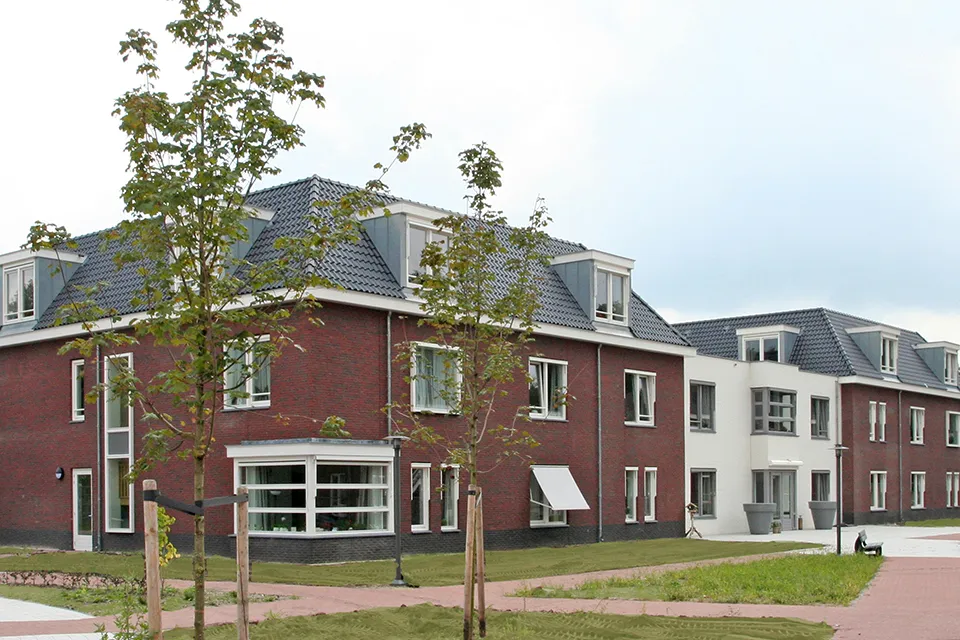
A good example was Birkhoven nursing home in Amersfoort, which was demolished in 2006 to make way for a new building with studios featuring private bathrooms. A park has also been laid out between the new buildings, with attractive places to sit and a grand café with a terrace. In 2009, the Bouwcollege was abolished and care organisations became responsible for their own accommodation, which was a good decision. Older people cannot be divided into two homogeneous target groups. Since the abolition, a huge variety of buildings has emerged. Thankfully, the days of care homes for older people and nursing homes are definitively behind us.
Question about this story? Ask your question
Keep following this
Get an email when a new story is published. No account needed.
- ThemeFuture-proofing healthcare estates
- SubjectAnniversary