Bouwen aan de Zorg is part of Louwers Mediagroep: 45+ specialist platforms in the Netherlands, Flanders and Wallonia. Trade magazines, websites, newsletters, video and podcasts, since 1987.
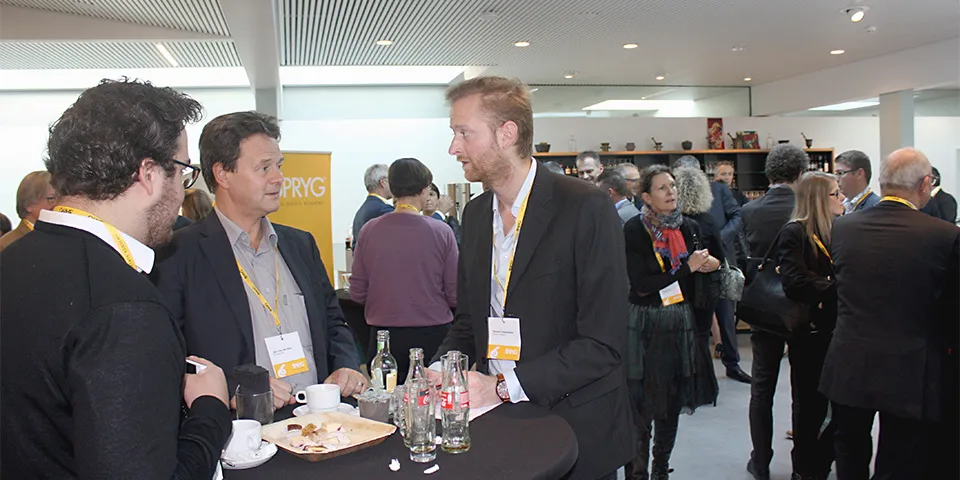
On Wednesday 23 October, you could meet the key players in Belgium’s healthcare real estate sector at the Kava Congres Centrum in Antwerp. The seventh annual Zorgvastgoedcongres, organised by Spryg, was held there.
Dominique Verté, professor of social gerontology at Vrije Universiteit Brussel, opened proceedings. He immediately pointed out that population ageing was happening faster and more markedly in Flanders than in Wallonia, and especially Brussels, and that the average age of the Flemish population would continue to rise over the coming decades. “The major difference with Brussels is largely due to the influx of young newcomers to the capital,” he explained.
The congress was held at the Kava Congres Centrum in Antwerp.
Tradition is disappearing
Verté raised some questions about the principle of ‘living at home for as long as possible’. “The long-standing tradition of older people living with their children has almost disappeared in a single generation,” he said. “That tradition is now declining rapidly among migrants too. Meanwhile, Flanders has invested very little in alternative forms of housing for older people. There are residential care centres and assisted living facilities, but initiatives such as intergenerational co-housing or living together in small-scale communities remain marginal in number. It is absolutely essential that the Flemish government experiment with these during the current legislative term.”
“The traditional nest egg, a home of one’s own, is rotting,” Verté warned. He was referring not only to the fact that many homes are unsuitable for people with disabilities, but also to changes in town and village centres. “Familiar surroundings can disappear too. Just look at how many retail shops have already vanished from our town centres.” He also considered the social aspects. “People on the lowest incomes live in the oldest homes. 40% of older people living with their children do so in a home that is more than fifty years old.
Owner-occupied homes and privately rented homes are particularly old. Social housing is younger on average.”
Oversupply
Verté fears that many providers of assisted living facilities will go under. Johan Crijns, CEO of Anima Care, believes this is a particular risk for so-called ‘stand-alones’. Valérie Jonkers, COO of Care Property Invest, confirmed that there is currently an oversupply. “But in the longer term, there is the double ageing effect: the baby boomers are reaching the age at which a suitably adapted living environment becomes necessary, while life expectancy continues to increase.” Crijns is also optimistic: “The market will regulate itself.” He is, however, concerned about staff shortages. “Workloads in the care sector are very high, while younger generations have higher expectations of their jobs. The key is to find good staff and retain them.”
Legislative framework
Jonkers sees the legislative framework as an overly restrictive factor. Care Property’s portfolio consists entirely of healthcare real estate, for example, but investing in hospitals is not legally permitted. “Moreover, healthcare funding in Flanders is not geared towards small-scale projects. That is the big difference with the Netherlands,” noted Sigrid Knops, CTO at Senior Living Group.
Jonkers also outlined the current Belgian healthcare real estate market. Around 35% is owned by private providers and 35% by charitable non-profit organisations (vzw’s). The public sector accounts for 30%. “The private sector’s share is increasing,” she added. The current wave of consolidation, in which smaller players are acquired by or merge with larger ones, is happening across all three types of provider. “All three are looking to achieve the necessary scale to be economically viable. For large international private players, the opportunity to increase their market share is also a factor.” Greater scale enables such groups to negotiate better credit terms. It also helps them reduce overheads and bring more expertise in-house. This, in turn, makes it easier to respond to regulatory changes. Finally, it provides greater continuity in management.
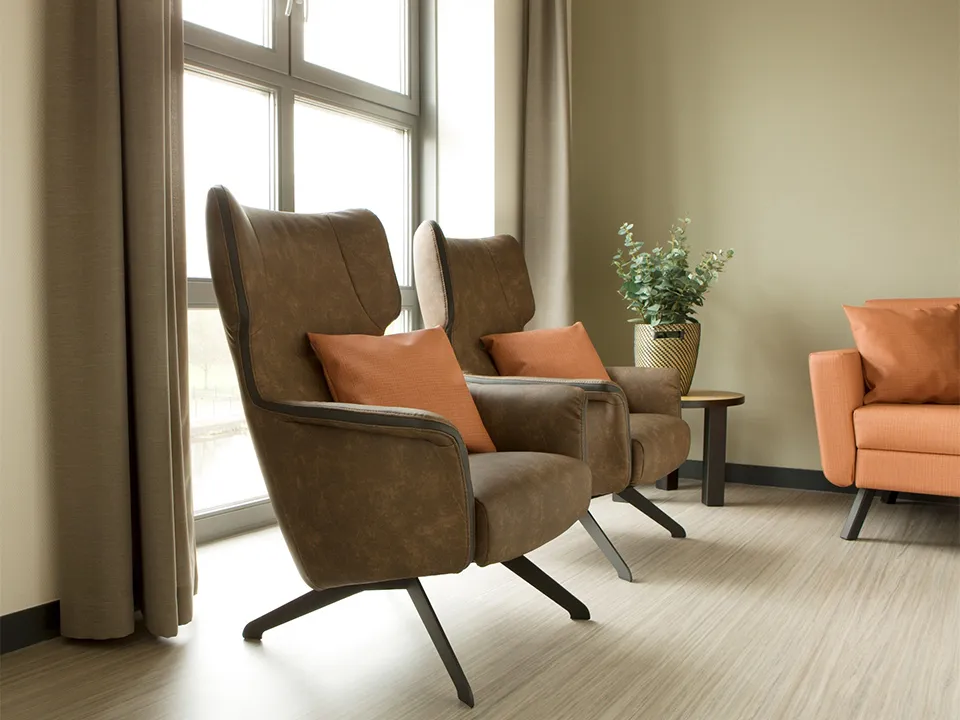
Topcare zette alle wensen en ideeën om in een licht, tijdloos en vooral huiselijk interieur.
Market shares
Senior Living Group (Korian) is currently the largest provider-operator in the Belgian market, with a 7,3% share, ahead of Armonea (Colisée) at 5,3%, Orpea at 3,9% and Vulpia at 1,9%. This does not necessarily mean that they own the same percentages of healthcare real estate. Specialist property companies such as Cofinimmo and Aedifica lease their buildings to care operators under long-term contracts. Operators with historically owned buildings can easily sell them to property companies and then rent or lease them back. This improves their solvency, as the property is no longer on their balance sheet.
The home as a source of income
Guy Pollentier of BNP Paribas Fortis emphasised the difference between financing and investing. “Banks finance projects using their customers’ money. Investing means using your own money.” He then went on to discuss ‘experimenting’ with forms of housing. “We should no longer see buildings as part of the cost, but as ‘functionalities’ and even as potential sources of income. For example, by making productive use of all suitable roofs to install solar panels. This could be part of the transition from an ownership-based to a service-based economy. The city of Rotterdam, for instance, has already mapped all the flat roofs within its boundaries.”
At the crossroads
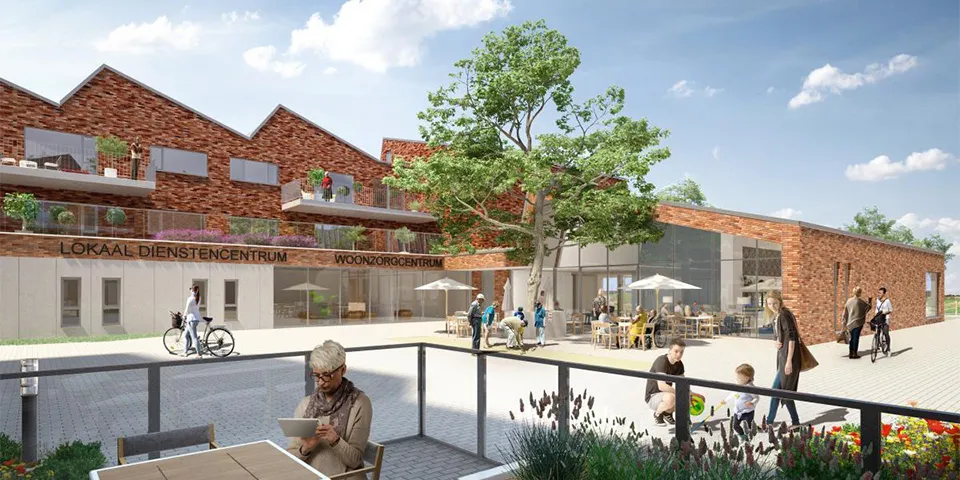
Tjeu Van Diessen, general manager of Zorgpunt Waasland, presented the plans for the Populierenhof care campus in Nieuwkerken-Waas. On a 3-hectare site, construction company Ibens is building a care campus comprising 120 residential care rooms, a community centre, thirty assisted living flats and out-of-school childcare, to designs by M4 Architecten. The campus is intended to become a social and economic meeting point between generations and neighbourhoods. This means it will serve as a base for family support, cleaning services and neighbourhood care in the surrounding area, and will also incorporate the local public library.
We use cookies to keep the site working properly. With your consent, we also use cookies for statistics and third-party banners. Read more in our privacy and cookie statement.