











Energy-efficient dishwashing with heat recovery
Text Jean van PolImage Hakvoort Professional
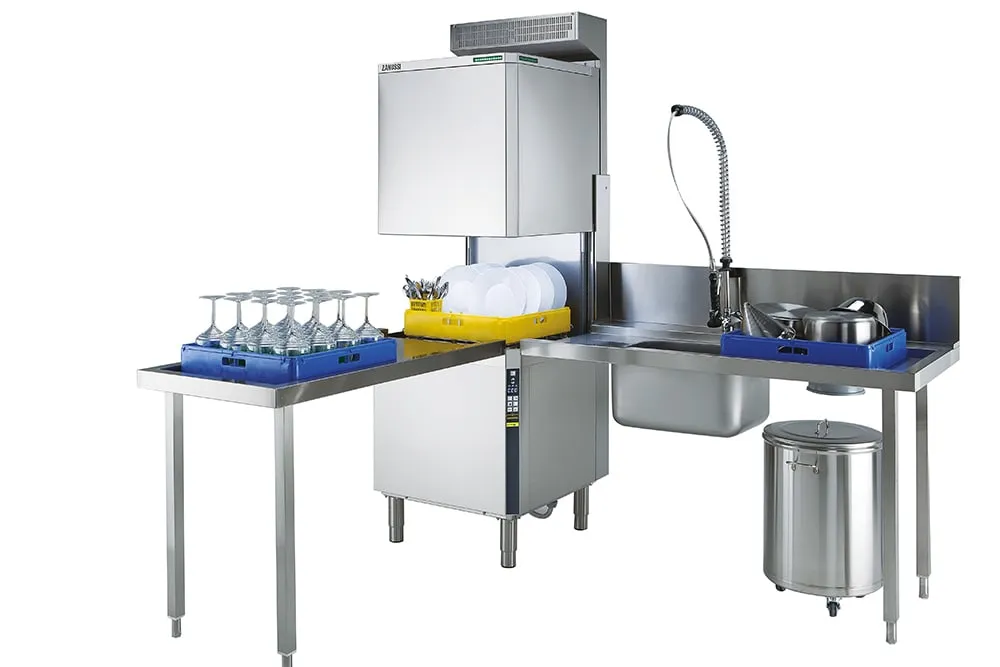
Energy costs are soaring in the pot-wash areas of many care organisations, partly because of the energy-hungry dishwashers used there. Investing in an energy-efficient model is therefore well worth considering. “A pass-through dishwasher with heat recovery can save as much as 60 per cent on energy compared with conventional pass-through machines,” says Eric Harsta, commercial manager at Hakvoort Professional in Emmeloord, a specialist in catering equipment and commercial kitchen design.
Pot-wash areas can sometimes feel like saunas: full of steam, very hot and stuffy. The cause?
The heat released by the dishwasher during each wash cycle. The humid air generated must then be extracted using an exhaust ventilation system or canopy. “It makes much more sense to reuse the heat the machine already produces,” says Harsta. “Dishwashers with heat recovery do just that and tackle the steam problem. Our Zanussi Professional pass-through dishwasher, with its built-in Energy Saving Device (ESD), uses the heat produced by the machine to preheat the incoming water to 50°C. This means the cold water does not have to be heated all the way from scratch, saving energy. An added benefit is that much less steam is released, making a separate extraction system unnecessary. That saves energy too.”
Time savings
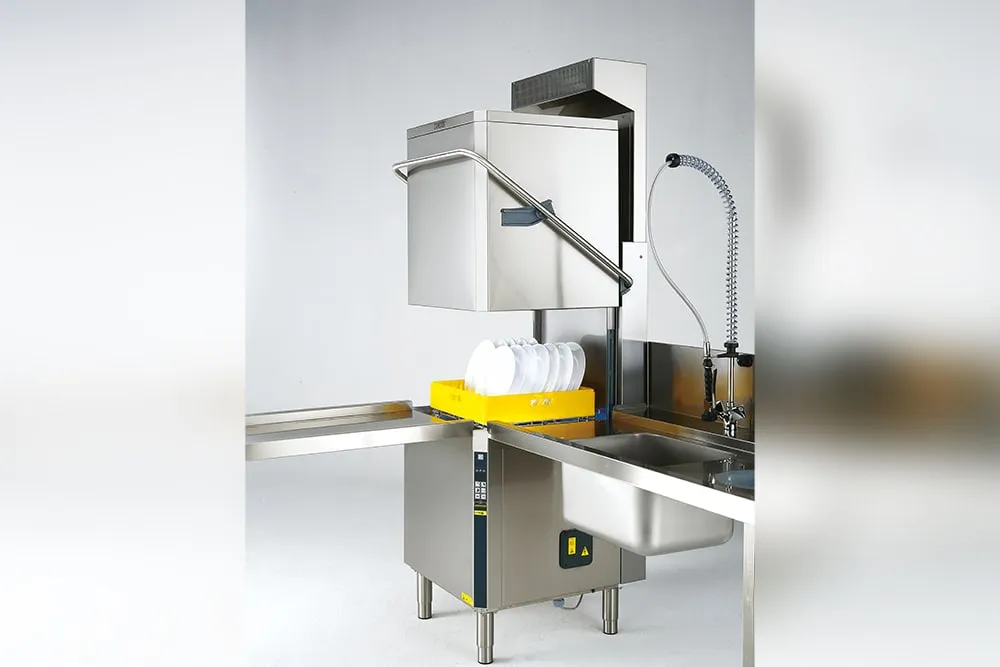
For more economical and more hygienic washing, Zanussi dishwashers are also equipped with the latest technical innovations. Eric Harsta lists the main features: “An advanced filtration system keeps food debris out of the wash water and improves the effectiveness of the detergent, meaning the wash water needs to be changed less often. An atmospheric boiler ensures a constant rinse temperature of 84°C, regardless of the water pressure. This guarantees outstanding washing results and thorough disinfection of the machine, which also helps extend its service life. In addition, the Zanussi uses just 2 litres of clean water per rinse cycle. For comparison, the market standard is 2.5 to 3 litres. The speed at which you can work with this pass-through dishwasher is also remarkable: just 45 seconds per wash cycle. That works out at around 1,440 plates and 80 racks per hour, delivering huge time savings.”
Limescale: the biggest enemy
Zanussi pass-through dishwashers are easy to use and maintain. But that is not all. The machines with heat recovery also feature automatic descaling. “This ensures complete limescale removal, tackling the biggest enemy in pot-wash areas,” says Harsta. “This specific innovation keeps the parts that come into contact with water, especially the heating elements, in perfect condition, as if they were new. This guarantees the best technical performance. It also prevents limescale build-up from causing unnecessary increases in energy consumption.”
EIA tax relief
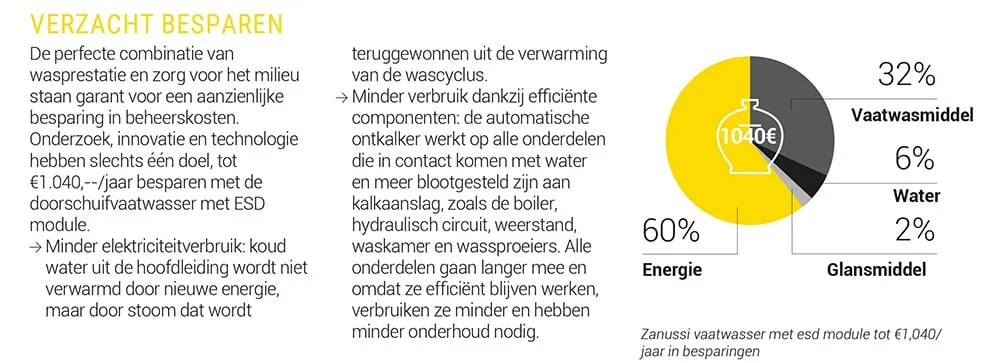
As a specialist in professional kitchen design, Hakvoort Professional also works extensively in the care sector. For this sector, where kitchens are generally used intensively, a dishwasher with heat recovery is currently the most sustainable choice. Harsta explains why: “A Zanussi dishwasher with an ESD module can save as much as 60 per cent on energy and up to 32 per cent on detergent. Using less water means less detergent is needed. This is important too, as these chemicals are becoming increasingly expensive. According to calculations carried out by LAB Electrolux Professional, the total annual savings can reach € 1,000.” Finally, the commercial manager has a practical tip for care organisations: “The environmental credentials of these innovative pass-through dishwashers are rewarded through the Energy Investment Allowance, or EIA. This allows most of the purchase cost, namely € 5,000, to be deducted from gross profit. That significantly reduces the investment cost.”
Question about this story? Ask your question
Keep following this
Get an email when a new story is published. No account needed.
- ThemeSustainable healthcare buildings
- SubjectGeneral







