Smart technology brings calm
Text René van Donschot Beeld S&L Zorg
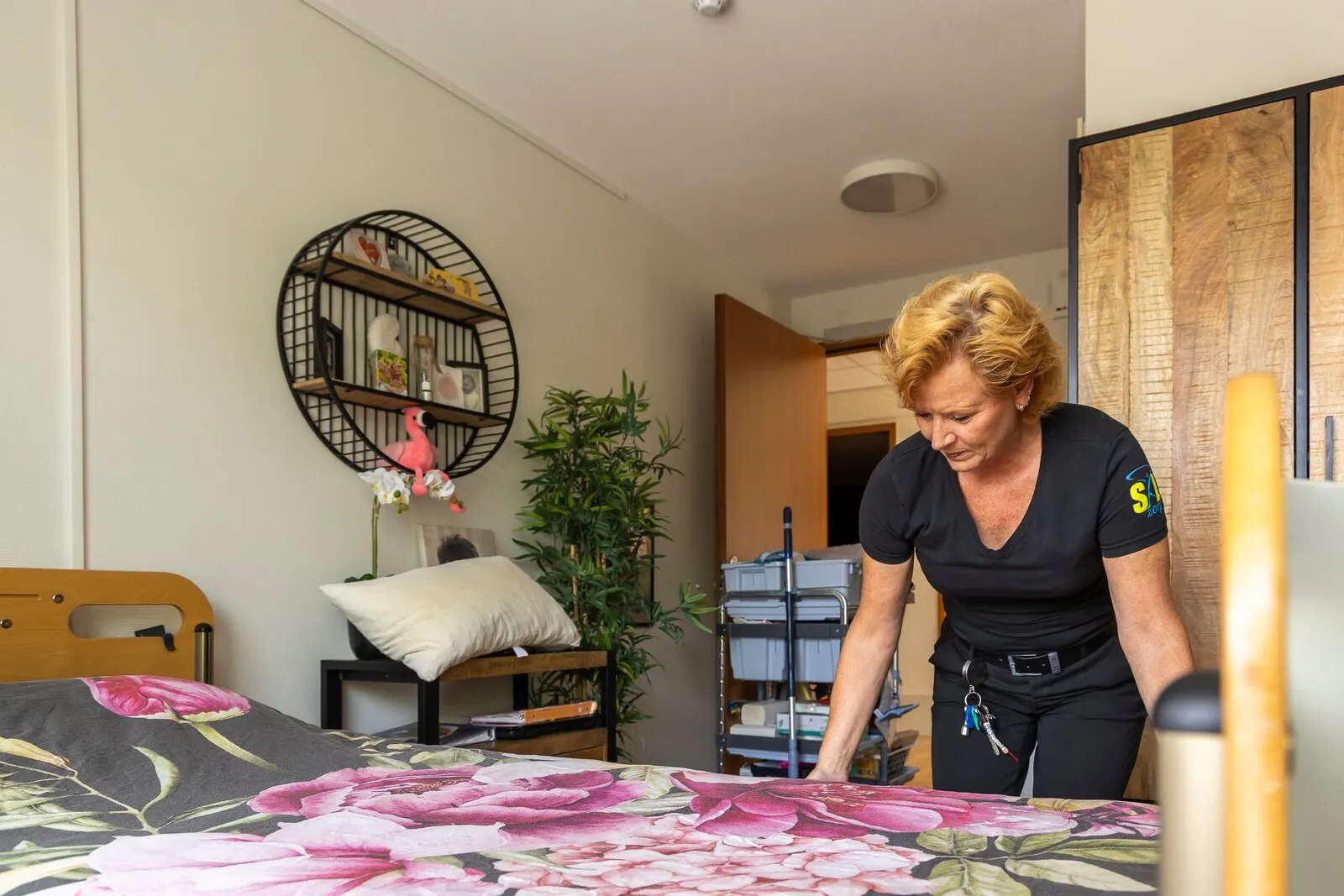
Healthcare is creaking under the strain. You hear it on the news, you read it in the paper and you feel it when you talk to care staff. There are simply too few hands for an ever more complex demand for care. Conjuring up extra staff out of thin air has become an illusion. Yet anyone walking through the corridors of S&L Zorg as an outsider will see that the organisation is not just clinging to old patterns. It is looking for smart ways out. A good example concerns something we rarely discuss at birthday parties: continence care. On paper, this innovation is all about sensors and wifi, but in practice it delivers above all human dignity, dry beds and calm on the unit.
In disability care and elderly care, the clock has traditionally ruled. That sounds orderly, but in practice it is often a rigid system. In traditional continence care, it means staff walk fixed check rounds, strictly to schedule. It is a reality with sharp edges. Residents are checked at set times, which means they are regularly (and often unnecessarily) disturbed in their deep sleep or during a day-activity session.
On the flip side of the same coin, this system means that residents who do need care sooner are left too long with saturated products. The honest, uncomfortable consequence? A greater risk of leakage, wet beds and a mountain of extra laundry. And worse still: prolonged moisture is a direct assault on delicate skin, leading to painful sore spots that nobody wants.
Measure to know
Madelon Derks, project manager for care at S&L Zorg, has by now been working on this process for well over two and a half years. The organisation realised it had to move away from those blind check rounds by the clock. "We asked ourselves: how can we optimise this process? It soon became clear that the smart continence care product Abena Nova was a valuable solution," says Derks. But S&L Zorg does not change things just because they happen to sound good in a brochure. First, the facts had to be put on the table. A thorough baseline measurement was carried out among 44 residents. This analysis laid bare the pain points in the daily care routes and formed the foundation for the new project plan.
Wifi proves the lifeblood of this smart care
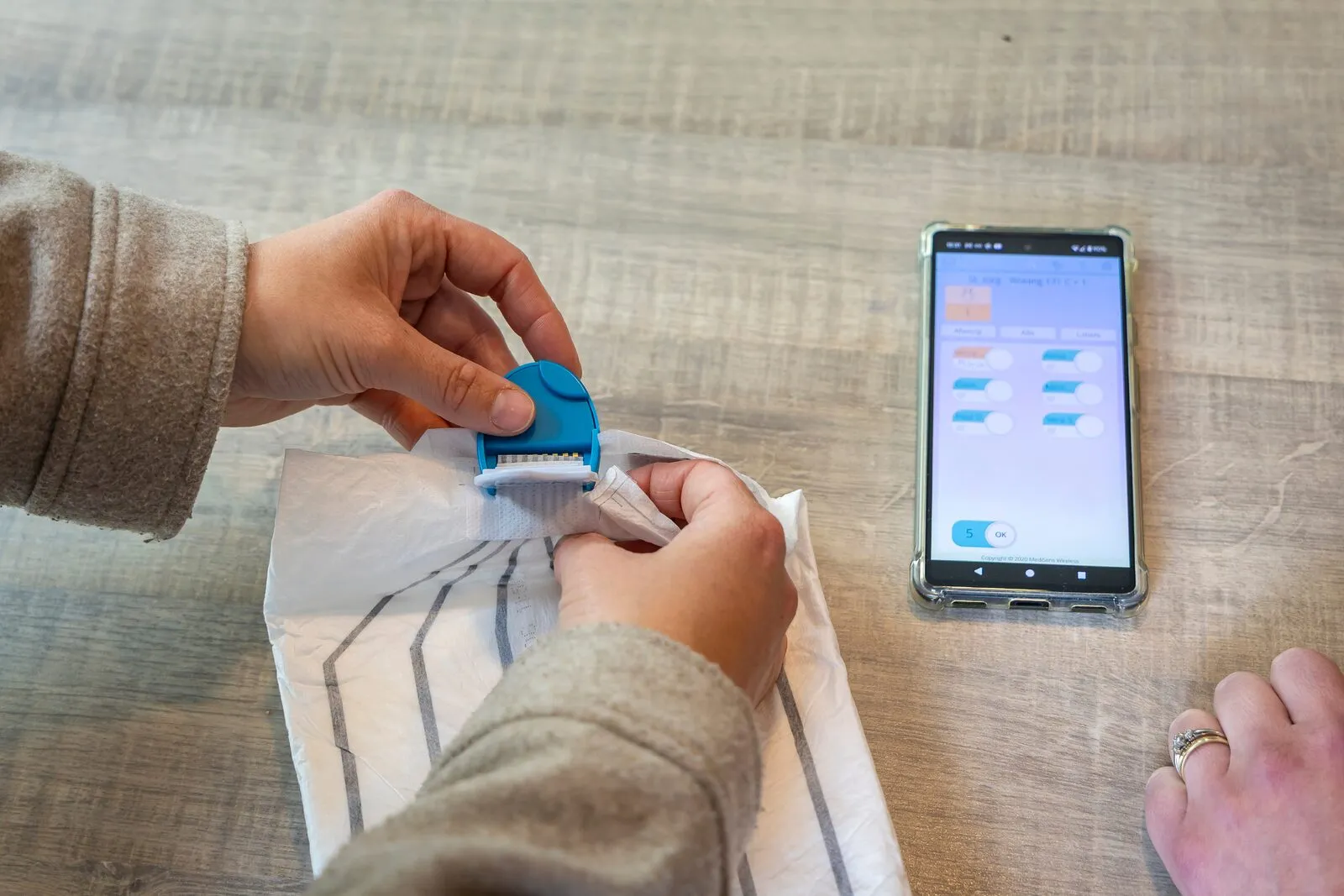
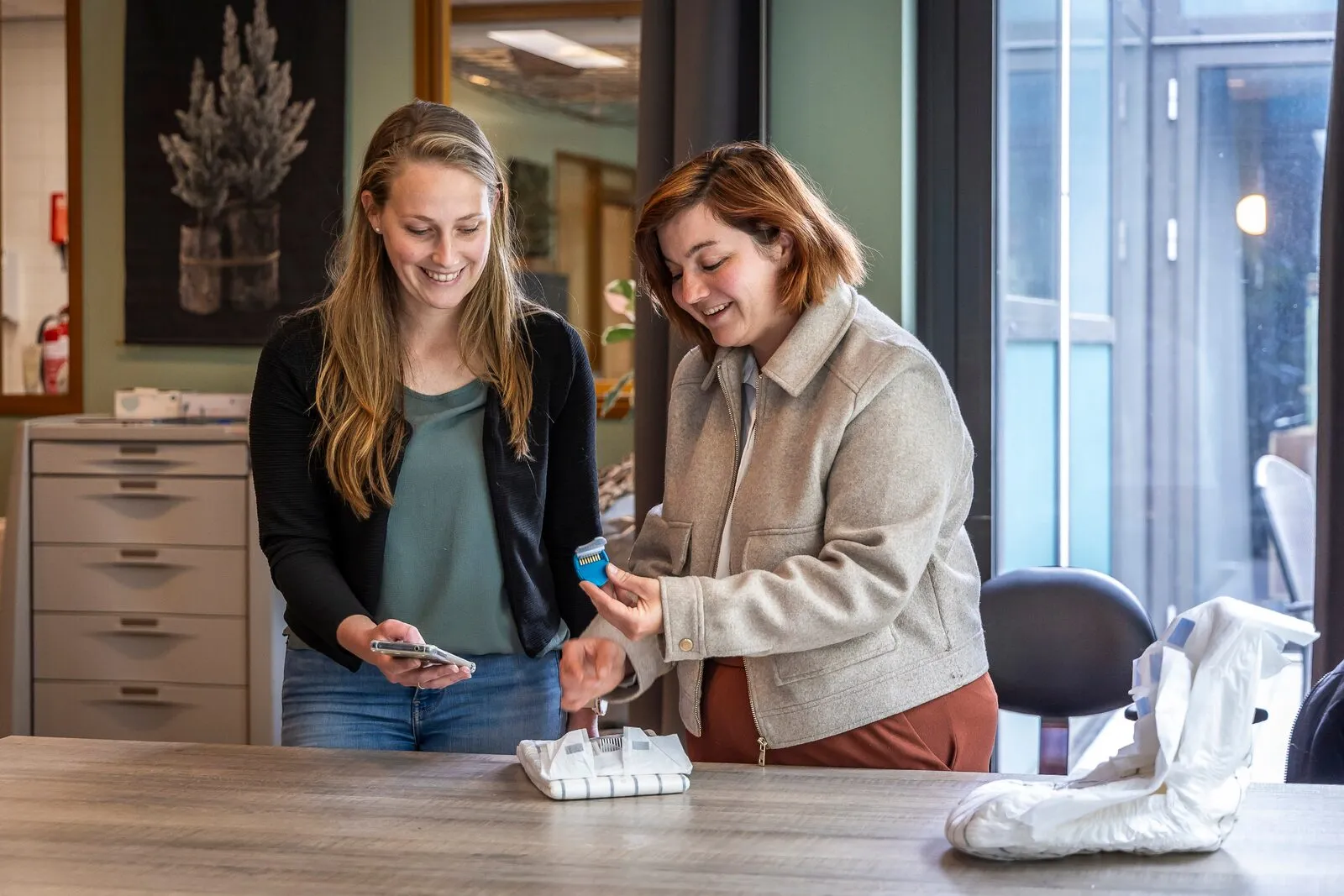
The technology that S&L Zorg subsequently brought in works through a meticulous interplay of sensors, wifi and an app. The continence product contains ultra-thin sensor strips that continuously measure how full it is. On the outside, the care worker clips on a small, reusable clip. This clip picks up the signals and passes the information on, fully anonymously, via the cloud to a central computer system.
Here you immediately run into the vulnerability of innovation. The lifeblood of the entire system is invisible: the wifi. For flawless operation, a stable internet connection covering every corner of the home is essential. If the wifi falters, the alerts do not come through. That directly affects the reliability of care and undermines staff confidence.
Guesswork is a thing of the past
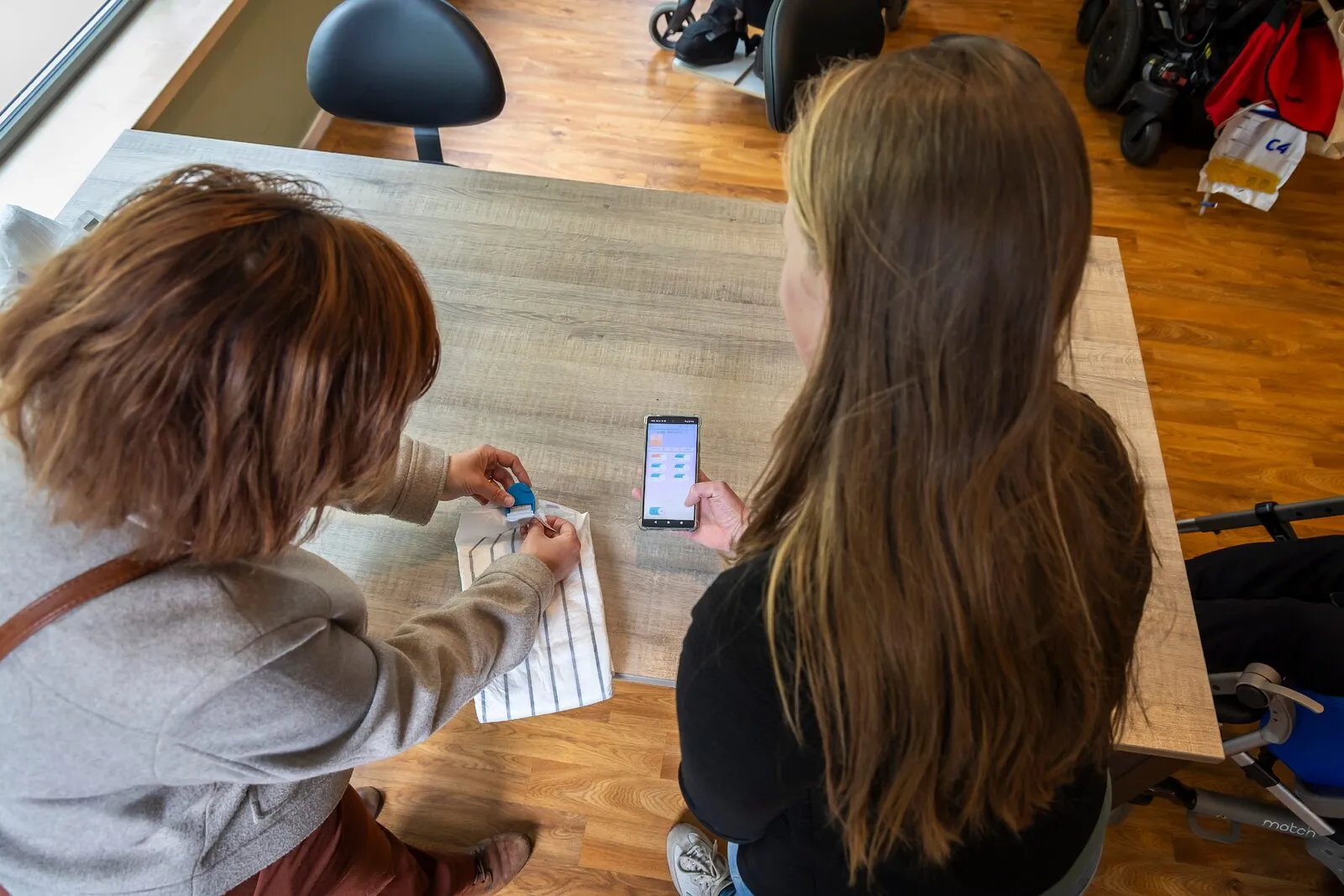
At one of the homes where the first tests ran, we spoke to client support worker Jennifer Poppe. She shows how it plays out on the shop floor. "Through an app, we can see exactly whether the product still absorbs enough. Green means changing is not yet necessary, orange indicates it is almost time and red means: take action," Poppe explains. The system's algorithm does not calculate this at random, but looks at the resident's previous voiding patterns and the current situation. Guesswork and needlessly disturbing residents are thereby a thing of the past.
Yet introducing an app is not enough on its own. The switch from "planning by the clock" to "providing care based on need" demands a fundamental culture shift. People are creatures of habit. Letting go of old routines (where that check round offered something to hold on to during a hectic shift) feels genuinely daunting to many at first. "You should not automatically schedule changes, but first check in the app whether it is actually necessary.
Once you get the hang of the system, you notice how much time and comfort it gives you," says Poppe of this shift. The technology does not take over the craft; it combines the care worker's expertise with clear data. The result is a tangible calm on the living units.
Wet beds cut by half
The official evaluation of the first phases shows that the total number of changes fell by an average of 22.8 per cent. That is hundreds of actions a week that are simply no longer needed. Even more telling: the number of completely wet beds fell by as much as fifty per cent. That measured figure is somewhat qualified, incidentally, after consulting staff, to whom the reduction in completely wet beds feels smaller. But one bed less wet is directly a better quality of life. Residents experience less restlessness at night, their sleep is not cruelly disrupted and their skin stays far better protected. Studies (outside S&L Zorg) consistently show that residents consequently sleep more deeply and for longer, which leads to less stress during the day and a markedly better mood.
In practice, you see this straight away. Take a resident who used to wake up often drenched and therefore deeply frustrated. Thanks to the app, the night shift now appears at the bedside at exactly the right moment, just before things go wrong. That turns the night for this resident back into a moment of rest instead of discomfort.
Relief for backs and shoulders
The benefits for staff prove just as weighty. Physical overload is a silent killer in healthcare. "Every transfer you do not have to make is a gain for your body," Derks stresses emphatically. Lifting, turning and needlessly moving less mobile people takes an enormous toll on staff's backs and shoulders. By cutting the number of changes by almost a quarter, the risk of absence drops. The time staff win back is moreover invested in what they once entered healthcare for: personal, warm attention for residents. In this way, S&L Zorg manages, in a time of staff shortages, to put humanity first all the same.
Subsidy and a look to the future
Anyone who thinks something like this is sorted in an afternoon is in for a surprise. Introducing this kind of technology is a long-haul process. Rolling it out across the entire organisation will take S&L Zorg a few years. A crucial hurdle soon proved to be the infrastructure: improving the wifi network was the absolute key to success. There is also a hefty price tag attached. To finance the scale-up, the organisation successfully secured a STOZ subsidy (Stimuleringsregeling Technologie in Ondersteuning en Zorg, the Dutch incentive scheme for technology in support and care) of more than €118,000. This covers not only the clips and incontinence products for three years, but also the much-needed training and guidance of staff on the shop floor.
"It contributes to the quality of care," Derks sums up the project with pride. "We can deliver exactly what is needed. If you spend less time on unnecessary changes, you have time left for things that really matter, such as genuine attention for residents." In the coming years, this way of working should simply become the "new normal" throughout S&L Zorg.
Lessons learned and tips for care organisations
For other care organisations, nurses and project leaders who also want to get started with smart aids, S&L Zorg has listed the key tips:
Get the basics right: technology does not fix poor basic care. Before you start with sensors, regular continence care, the choice of the right product and the team's basic knowledge must be sound.
Invest in good wifi: do not underestimate the technology. A stable wifi connection throughout the home or unit is essential. If the wifi is poor, the team quickly loses confidence in the app.
Involve IT and procurement from the start: set up a mixed project team immediately. Matters such as privacy (GDPR), system integrations and funding (such as subsidies) call for good cooperation between care, IT and procurement from day one.
• Focus above all on behavioural change: pay close attention to letting go of old routines. Deploy "ambassadors" on the shop floor. They can coach colleagues in the workplace and show the benefits first-hand.
Use the data for a personal plan and look at the patterns over a longer period. This gives valuable insights for improving a resident's personal plan, for example by adjusting drinking times or medication.
• Keep measuring and evaluating: always start with a baseline measurement to know the starting situation. Also keep tracking results (such as the number of changes, wet beds and skin condition). With these figures, you can prove success to residents and their network, staff, and the management and board.
Question about this story? Ask your question
Keep following this
Get an email when a new story is published. No account needed.
- SubjectZorgTech